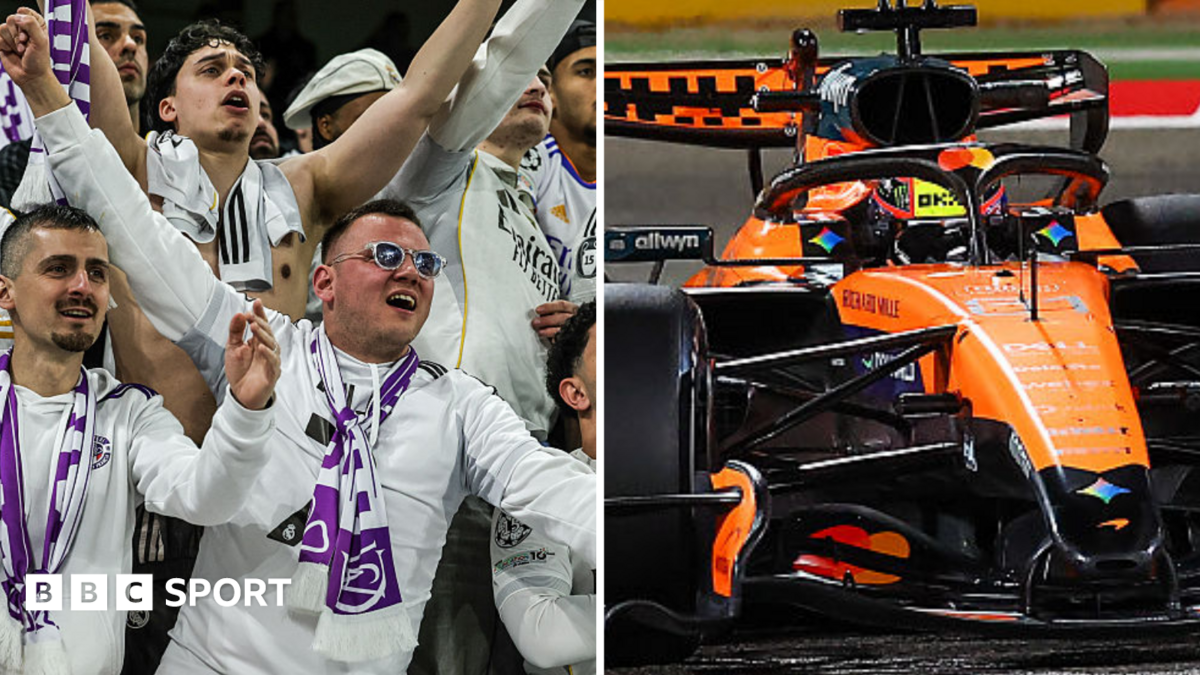
What started as "a joke, a fantasy," Madrid's new 10-year Formula 1 Grand Prix circuit aims to make its mark this weekend in a city fiercely devoted to football.
Formula 1 is set to make a dramatic return to Madrid for the first time since 1981, bringing high-octane racing to a city world-renowned for its passionate football culture. This weekend marks a significant moment, as the sport takes on the challenge of captivating an audience that has not seen a Spanish F1 world champion in two decades.
The ambitious project, which organizers admit began as a playful idea, now culminates in a newly constructed street circuit. It is poised to compete for attention with the likes of Real Madrid and Atletico Madrid, established giants in a city that breathes football.
This new era for the Formula 1 Madrid Grand Prix represents a bold move by the sport to further its global appeal. It seeks to establish a new foothold in its traditional European heartland, promising a unique experience for fans both on and off the track, according to reporting by BBC Sport - Formula 1.
Madrid's Sporting Heartbeat and F1's New Challenge
Madrid boasts an unparalleled sporting heritage, largely dominated by football. Real Madrid, often considered the greatest club in history, holds an incredible 15 European Cups and 36 La Liga titles. Their legacy includes legendary "Galacticos" like Zinedine Zidane and Ronaldo, extending to modern stars such as Jude Bellingham and Kylian Mbappe, who recently thrilled 75,000 fans with a majestic goal.
Despite this fierce devotion to football, local residents express a mix of pride, curiosity, and excitement for the F1 race. One fan stated, "The race can take Madrid's identity outside of football, and the most we can be seen by the outside world is the best." Another added, "We've always been dreaming of having something from F1 closer to home," hoping it brings the city more into the spotlight and offers a distinct "taste of Spain" compared to the more international vibe of Barcelona.
From Fantasy to Reality: Building the Madrid F1 Circuit
The journey to bring Formula 1 to Madrid was far from straightforward. Luis Garcia Abad, head of Madring and former manager to Spanish F1 champion Fernando Alonso, described the initial concept as "a joke, a fantasy." He likened securing an F1 Grand Prix to chasing a unicorn, given the "huge queue of cities" vying for a contract.
After years of discussions, a 10-year contract was signed. The chosen venue, an expo area managed by Ifema near the city’s airport, contrasts with Madrid's historic city center. The construction faced immense challenges, including Spain's wettest winter in two decades, which complicated work on clay soil. Carlos Jimenez, Ifema's operations director, confirmed a significant investment of 65 million euros for additional construction, with the track itself costing 85 million euros.
The Iconic Monumental Corner and Track Features
The Madrid F1 circuit is a true street circuit, blending public roads with purpose-built sections, giving it an intense and narrow feel. It features 22 corners, with elevation changes and banking. Luis Garcia Abad describes it as "a real experience," highlighting that "every part of the track has its own personality." Charles Leclerc, an F1 driver, has already called it an "amazing track.""
The most talked-about feature is the "Monumental" Turn 12, a colossal 26-degree banked corner that is significantly longer than the one at Zandvoort. This iconic section is designed to host over 30,000 spectators, complete with a VIP viewing area resembling a castle atop a hill. This unique corner aims to provide a recognizable and thrilling element to the new Madrid F1 track.
Beyond the Race: Madrid's Grand Prix Experience
Beyond the asphalt, organizers are emphasizing sustainability and a broader experience. The race utilizes renewable energy and incorporates existing buildings. To manage traffic, fans are encouraged to use Madrid’s high-quality public transport, with many car parks removed. However, VIP areas with dedicated access will cater to high-profile attendees like Patrick Dempsey or Rafael Nadal.
Carlos Jimenez emphasizes Madrid's current "momentum" and its vibrant appeal. The city aims to provide an "unbeatable" post-race party experience, leveraging its renowned gastronomy, spectacular climate (mild in September), and lively nightlife. The Grand Prix seeks to integrate seamlessly with the city's existing strengths, offering more than just a race but a complete cultural and entertainment package.
Frequently Asked Questions
When is the Formula 1 race happening in Madrid?
The new Formula 1 Grand Prix in Madrid is scheduled to take place this weekend, marking its return to the city for the first time since 1981.
What is unique about the new F1 circuit in Madrid?
The new Madrid F1 circuit is a street circuit featuring 22 corners, significant elevation changes, and banking. Its most iconic feature is the "Monumental" Turn 12, a 26-degree banked corner designed for over 30,000 spectators.
How much did the Madrid Formula 1 circuit cost to develop?
The track itself cost 85 million euros to construct, with an additional 65 million euros invested in surrounding infrastructure and construction for the Madrid Formula 1 Grand Prix.
Who is behind the Madrid Formula 1 Grand Prix?
The Madrid F1 Grand Prix is a collaborative effort, with Luis Garcia Abad (Madring boss) and Carlos Jimenez (Ifema operations director) playing key roles in developing and managing the 10-year contract for the race.