Sprint queen Amy Hunt made history with four European golds, but experts pinpoint her start out of the blocks as the crucial area for improvement to reach global dominance.
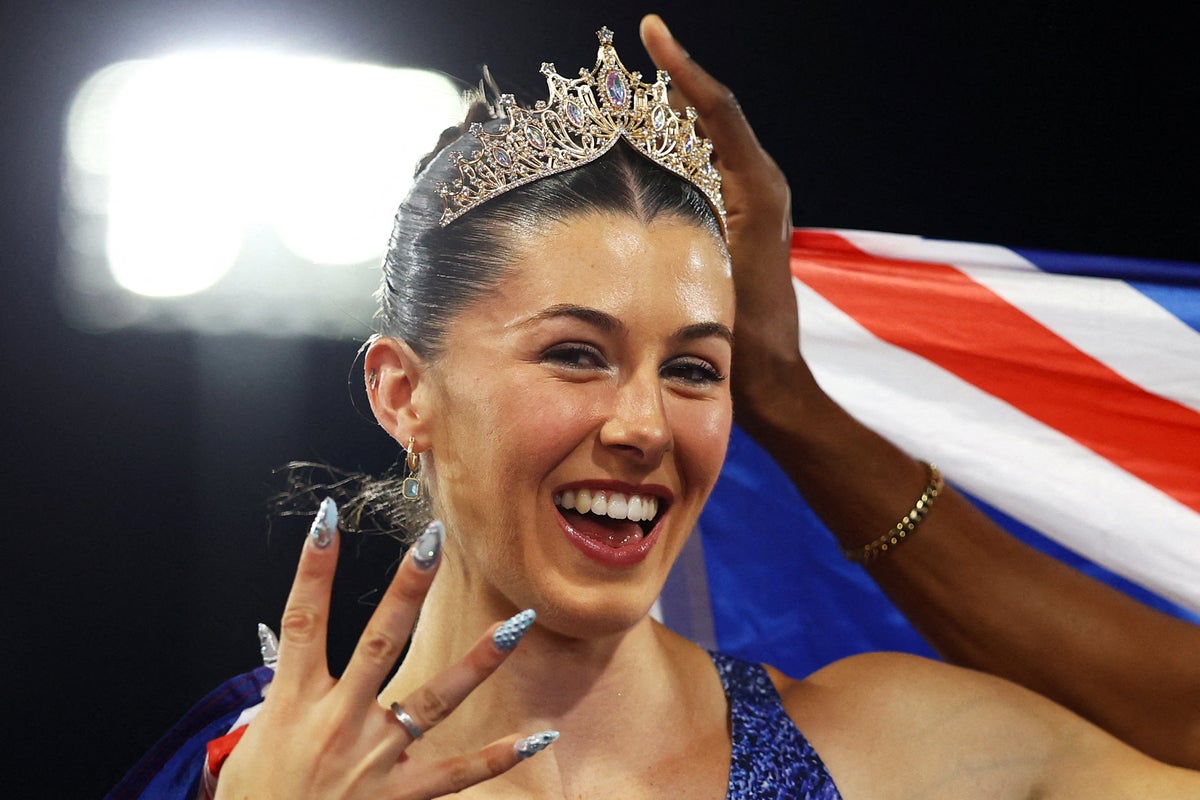
British sprinter Amy Hunt captivated audiences at Birmingham’s Alexander Stadium, crossing the finish line with an expression blending sheer joy and utter amazement. The 24-year-old made history as the first athlete in the European Championships' 92-year history to secure four gold medals, dominating both the individual 100m and 200m events, then adding victories in the women’s 4x100m relay and the innovative mixed 4x100m relay.
These monumental wins included triumphs over her compatriot Dina Asher-Smith, now celebrated as Europe's most decorated athlete at that level. The performances signaled a symbolic passing of the baton, as Hunt looks set to become the next great British sprinting talent. She openly embraced the challenge, declaring her ambition to be “iconic” before embarking on her historic quest, even joyfully exclaiming, “Are you not entertained?” after sealing her individual sprint double.
Beyond the showmanship, Hunt possesses an intense work ethic, evident not only in her track performances but also in her first-class degree from Cambridge University. Reflecting on her achievements, she stated, “I’m just so proud of myself and the way I’ve handled this week — the emotions, the recovery and being strict and staying disciplined after all the highs. I’ve stayed true to myself and true to the job I came out here to do.” With celebrations now winding down, attention quickly shifts to her future trajectory and how the new face of British sprinting can accelerate her path to global supremacy, according to reporting by The Independent - Sport.
Mastering the Start: Hunt's Key to Unlocking More Speed
Perhaps the most daunting prospect for Hunt’s rivals is the significant scope for her improvement, particularly concerning her start. At nearly 6ft tall, she is consistently one of the slower sprinters off the blocks, ranking seventh among eight finalists at the 10m mark in the 100m final. Hunt herself admits to a “love-hate relationship” with the 60m indoor sprint, her weakest discipline, which relies heavily on an explosive start.
Despite this, her natural strengths lie in her formidable finishing speed and an unwavering self-belief that allows her to thrive under pressure on the biggest stages. She described her 100m victory this week as “preordained,” believing, “It was in the air and I knew it was going to happen, regardless of whatever anyone else was doing.” Her recent personal best of 7.04 seconds in the 60m and her first sub-11 second 100m performance this year indicate progress, yet sharpening her initial burst remains crucial.
Building Endurance and Versatility for Global Success
While Hunt has excelled in speed, there's room to grow her endurance and expand her versatility. Currently, she ranks 14th globally over 200m and 25th over 100m for this year. Health issues, specifically low blood pressure that caused her to feel faint after a London Diamond League 200m race, have limited her ability to commit to endurance training this season, forcing a greater focus on speed work.
This means her 200m performance, which could benefit from increased stamina, holds further potential for future development. Hunt also draws inspiration from American legend Allyson Felix, the most decorated athlete in World Championship history, and admires sprinters who master multiple distances. Hunt has expressed a keen interest in stepping up to the 400m, believing it could give her an “extra edge” over shorter distances by building additional strength.
The Road Ahead: Beijing 2027 and LA 2028 Olympic Dreams
With her European success firmly established, Hunt’s gaze is now fixed on major international championships. Her immediate targets include the World Championships in Beijing next year, which serves as a vital stepping stone toward her ultimate ambition: the 2028 Olympic Games in Los Angeles. Before the LA Olympics, the World Indoor Championships in Bhubaneswar, India, could offer strategic opportunities.
If Hunt decides to explore the 400m, the indoor championships would provide an ideal low-pressure environment to test the waters, given the absence of 100m or 200m races on the short indoor track. Alternatively, if she remains focused on an Olympic sprint double, the World Indoors would be a crucial final chance to fine-tune her 60m start in a competitive setting, allowing her to address the “unfinished business” of missing this year's final by just two-hundredths of a second.
Chasing a Legendary Legacy and Outpacing Rivals
Amy Hunt is openly preoccupied with building a “glittering legacy,” aiming for “lists and lists of medals” on her Wikipedia page. This ambition fueled her decision to prioritize the Commonwealth Games recently, a choice not all top athletes make. She holds immense admiration for Dina Asher-Smith, referring to her as “the GOAT” and recognizing her longevity as an inspiration.
However, Hunt’s fiercely competitive nature means she intends to surpass Asher-Smith's achievements over her career, just as she did in the European 200m final. While Asher-Smith still holds all three national sprint records and a clear lead in international medals, Hunt's four golds in Birmingham mark a significant step. The "passing of the baton" is far from complete, but Hunt, no stranger to hard work, is clearly ready for her next chapter.
Frequently Asked Questions
What historic achievement did Amy Hunt accomplish recently?
Amy Hunt made history by winning four gold medals at the European Championships in Birmingham, becoming the first athlete in the event's 92-year history to achieve this feat.
What are Amy Hunt's main strengths as a sprinter?
Hunt's greatest strengths include her exceptional finishing speed and an unshakeable self-confidence in her abilities, allowing her to perform strongly on major athletic stages.
What is the biggest area Amy Hunt needs to improve to get faster?
Her most notable area for improvement is her start out of the blocks. At nearly 6ft tall, she struggles with initial acceleration, often being among the slowest in the first 10 meters of a sprint.
What are Amy Hunt's future Olympic aspirations?
Amy Hunt is targeting the 2028 Olympic Games, seeing the World Championships in Beijing next year as a crucial stepping stone towards her ultimate goal of Olympic glory.
Could Amy Hunt compete in the 400m race in the future?
Yes, Hunt has expressed a desire to “step up to the 400m” like her idol Allyson Felix, believing the additional strength from this event would enhance her performance in shorter sprints.