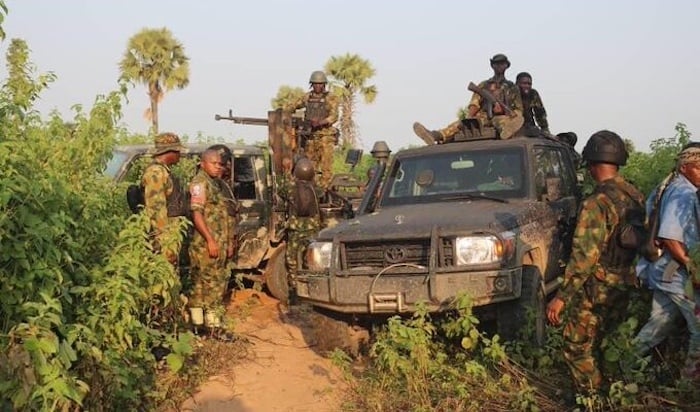
The daring military operation on September 2, 2026, involved an intense firefight with suspected terrorists along Kebbi's Wasagu-Ayu Road.
Troops from Operation FANSAN YAMMA successfully rescued six kidnapped victims following a decisive confrontation with suspected terrorists. The incident unfolded on September 2, 2026, along the Wasagu-Ayu Road, situated in the Wasagu Local Government Area of Kebbi State, North-West Nigeria.
The rescue mission was launched after security forces received credible intelligence regarding the presence of a terrorist group in Mehinua Village, a location along the same road. This critical information prompted a rapid military response aimed at disrupting their activities and freeing those held captive.
Upon engaging the militants, soldiers demonstrated superior firepower, compelling the terrorists to abandon their victims and flee the scene. All six individuals were secured unharmed, according to reporting by Daily Post Nigeria.
Swift Intelligence Fuels Kebbi Anti-Kidnapping Mission
The success of this operation highlights the crucial role of timely and accurate intelligence in combating criminal activities across the region. Acting on specific information about the terrorists' whereabouts, Sector 2 of the Joint Task Force North West, under Operation FANSAN YAMMA, quickly mobilized its personnel.
Their objective was clear: to intervene swiftly, neutralize the threat, and ensure the safe return of the kidnapped citizens. This proactive approach allowed the troops to intercept the suspected terrorists before they could cause further harm or move their captives.
Intense Firefight Leads to Successful Victim Rescue
As the military unit arrived at Mehinua Village, they immediately encountered the suspected terrorists, leading to a fierce exchange of gunfire. The soldiers engaged the criminal elements with overwhelming force, putting significant pressure on the insurgents.
Faced with the sustained assault, the terrorists were unable to maintain their position and were forced to retreat into the surrounding areas, leaving their victims behind. Troops then moved quickly to secure the location and ensure the safety of all six kidnapped individuals, who were found to be in good condition.
In addition to rescuing the victims, the operation also resulted in the recovery of a vehicle. Both the rescued individuals and the recovered vehicle were subsequently handed over to local community authorities for further necessary actions and support.
Bolstering Security Along Vulnerable North-West Routes
This successful intervention underscores the effectiveness of rapid military response and sustained security operations in addressing the persistent challenge of kidnapping and other criminal acts along key routes. Such actions are vital for protecting communities throughout Kebbi State and the wider North-West region.
The mission further reinforces public confidence in the armed forces' ability to secure major access routes and maintain peace in areas frequently affected by terrorist and criminal activities. It serves as a strong message that intelligence-led operations can disrupt criminal networks and safeguard citizens.
Frequently Asked Questions
What is Operation FANSAN YAMMA?
Operation FANSAN YAMMA is a military initiative by the Joint Task Force North West, specifically designed to counter terrorism and criminal activities, including kidnapping, across vulnerable regions of North-West Nigeria, such as Kebbi State.
Where exactly did the Kebbi rescue operation take place?
The rescue operation occurred along the Wasagu-Ayu Road, specifically near Mehinua Village, within the Wasagu Local Government Area of Kebbi State, Nigeria.
Were the kidnapped victims or troops harmed during the operation?
All six kidnapped victims were rescued unharmed, and the source content does not indicate any casualties among the troops involved in the engagement.
What happens after kidnapped victims are rescued by the military?
Following their rescue, victims and any recovered assets, such as vehicles, are typically handed over to relevant community authorities to ensure they receive appropriate care, support, and administrative follow-up.