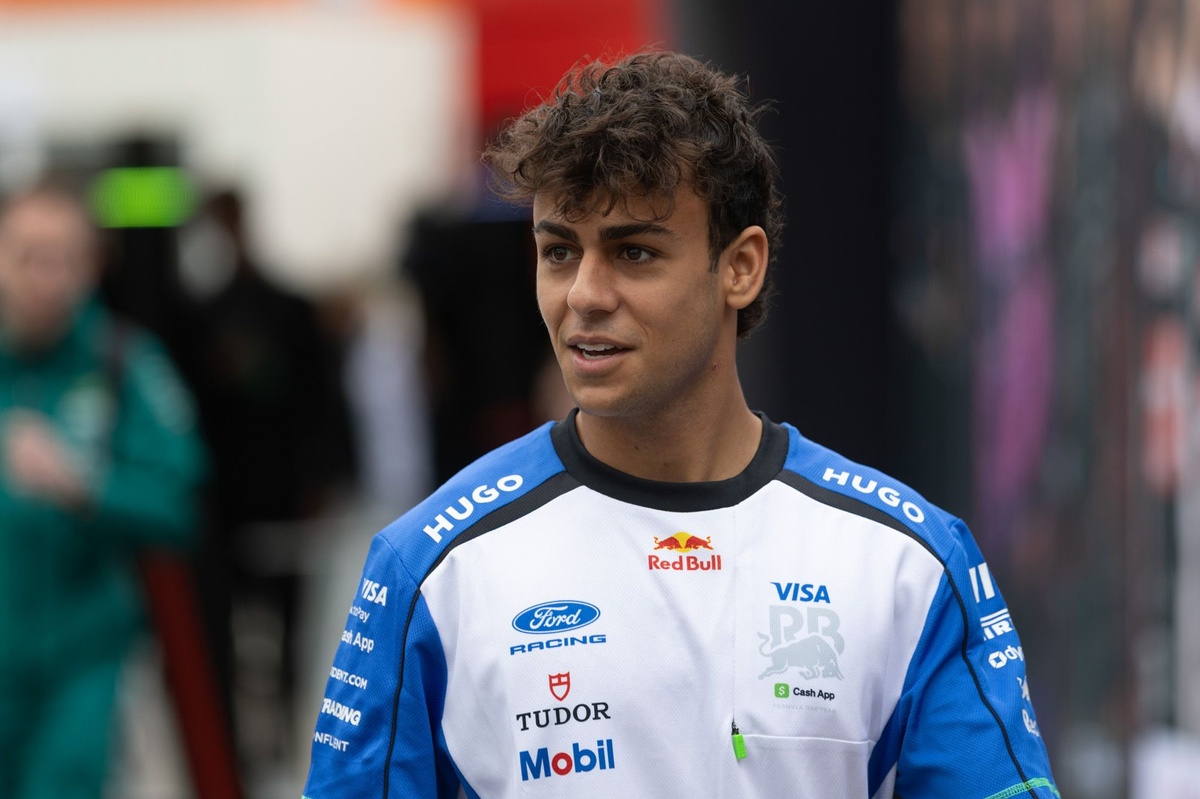
F1 TV analyst Alex Brundle argues drivers should not be penalized for secondary overtakes when taking evasive action, citing Lindblad's reaction to Verstappen's crash.
F1 TV analyst Alex Brundle has sharply criticized the drive-through penalty issued to rising talent Arvid Lindblad during the recent Dutch Grand Prix, describing the stewards' decision as "harsh." His comments have ignited a discussion among racing fans and pundits alike.
Brundle's strong opinion centers on the belief that drivers should not face punishment for making secondary overtakes when their primary action is to take necessary evasive maneuvers on the track, reacting to an unfolding incident.
The controversial incident unfolded at Zandvoort during a chaotic opening lap, which saw home favorite Max Verstappen crash at Turn 14, causing significant disruption for the drivers behind, including Lindblad, according to reporting by Motorsport.com - F1.
The Controversy Surrounding Lindblad's Penalty
Alex Brundle, a well-known voice in motorsport commentary, unequivocally called the penalty against Arvid Lindblad "harsh." His remarks highlight a crucial debate within racing circles regarding the interpretation of rules during fast-paced, unpredictable incidents. Brundle's analysis suggests that the context of evasive action should be a significant mitigating factor in such decisions, rather than leading to an immediate penalty.
Examining Evasive Action in Racing
The core of Brundle's argument rests on the principle of evasive action. In high-speed racing, drivers often react instinctively to avoid collisions or hazards. If such a reaction inadvertently leads to a "secondary overtake" – meaning passing another competitor while avoiding an incident – Brundle contends that penalizing the driver for this consequence is unfair. He believes their initial intent was safety, not gaining an illicit position.
The Zandvoort Incident: Max Verstappen's Crash
The specific scenario that led to Lindblad's penalty occurred early in the Dutch Grand Prix. On the very first lap, a significant disruption took place when local hero Max Verstappen's car collided with barriers at Turn 14 at the Zandvoort circuit. This sudden event created a hazardous situation for the drivers following closely behind, forcing immediate and decisive reactions from competitors like Arvid Lindblad as they navigated the scene of the crash.
Frequently Asked Questions
What penalty did Arvid Lindblad receive at the Dutch Grand Prix?
Arvid Lindblad was issued a drive-through penalty during the Dutch Grand Prix at Zandvoort, a decision that has sparked significant debate among F1 analysts.
Why did Alex Brundle describe Lindblad's penalty as 'harsh'?
F1 TV analyst Alex Brundle labeled the penalty 'harsh' because he believes drivers should not be penalized for secondary overtakes when they are primarily taking necessary evasive action to avoid an incident on track.
What caused the disruption leading to Lindblad's penalty at Zandvoort?
The disruption occurred on the opening lap of the Dutch Grand Prix when Max Verstappen crashed at Turn 14 at the Zandvoort circuit, forcing drivers like Lindblad to react quickly to avoid the incident.
Who is Alex Brundle?
Alex Brundle is a respected F1 TV analyst and commentator, known for providing expert insight and analysis on Formula 1 races and incidents.
Who is Arvid Lindblad?
Arvid Lindblad is a racing driver who was competing at the Dutch Grand Prix when he received the controversial drive-through penalty that was criticized by Alex Brundle.