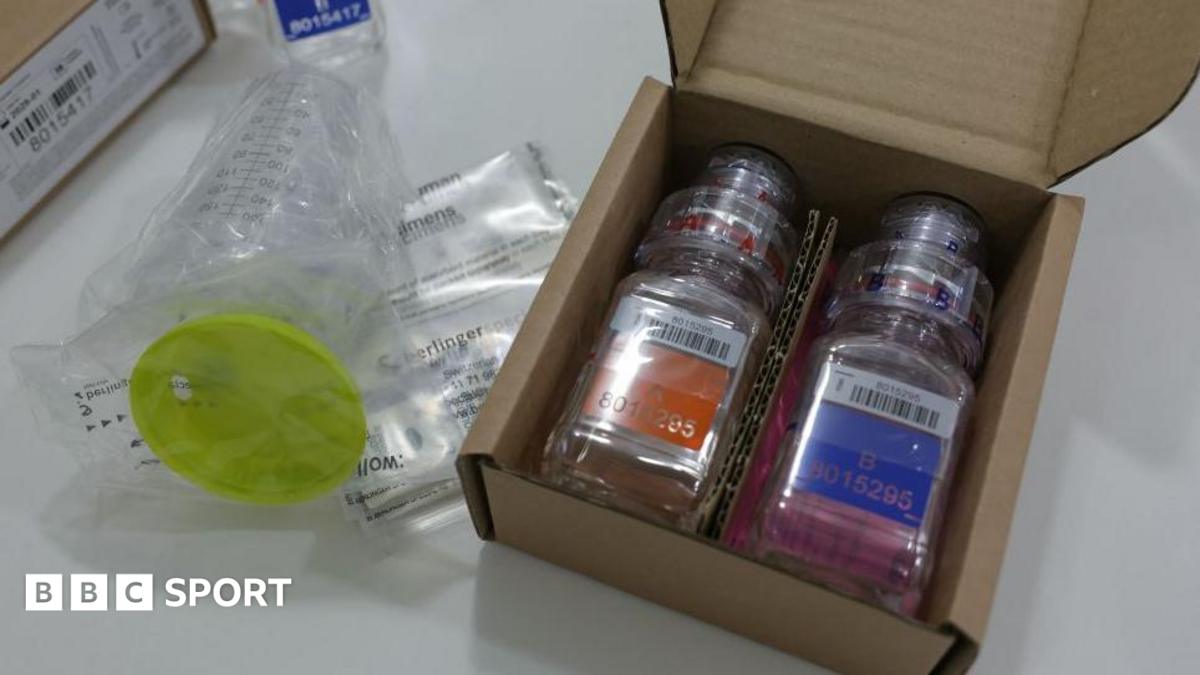
Amid concerns over disrupted sleep and rider safety, the UCI defends these exceptional late-night checks as crucial in the fight against performance-enhancing micro-dosing.
The 2026 Tour de France has seen a dramatic new development in the fight against doping: a series of late-night anti-doping tests. These unannounced checks have stirred considerable controversy, especially after yellow jersey leader Tadej Pogacar and his main rival, Jonas Vingegaard, were both woken in the middle of the night for testing on a Saturday.
The sudden disruption to sleep has raised concerns among cyclists, particularly after Vingegaard, a Danish rider, crashed out of the race on the very next stage. Many in the cycling community speculate that his disrupted rest might have played a role in the accident, highlighting the intense physical and mental demands of the sport's biggest race.
These nocturnal tests, occurring between 11 PM and 6 AM, are a rare and usually restricted measure, understood to be reserved for "exceptional circumstances" where prompt testing is deemed essential, according to reporting by BBC Sport - Top Stories.
Why are cyclists facing night-time doping tests?
The primary reason for these unusual night-time tests is to combat micro-dosing, a sophisticated method where athletes take tiny amounts of performance-enhancing drugs that exit the system quickly. Substances like peptides (EPO, HGH) and testosterone can be undetectable within a few hours, creating a very short window for detection.
If riders know they typically won't be tested during a seven-hour overnight window, some might exploit this to micro-dose. Jonathan Vaughters, a former team-mate of disgraced cyclist Lance Armstrong and now boss of EF-Education Easypost, strongly supports the move. He explained that a low dose of a peptide hormone could clear the system in about four hours, making an 11 PM dose undetectable by 3 AM.
Vaughters took to X to voice his backing, stating, "Two am testing is one of the very effective ways to prevent peptide (EPO, HGH) and testosterone micro dosing. If [the] UCI had tested us in 2001 at 2am? We'd all have been suspended and saved the sport 25 years of drama." He views these tests as a powerful deterrent, acknowledging they are inconvenient but infrequent.
How common are late-night anti-doping tests?
For the International Testing Agency (ITA), which conducts these anti-doping tests on behalf of the Union Cycliste Internationale (UCI), carrying out checks in the middle of the night is "unusual" and "rare." In France, testing between 11 PM and 6 AM requires special permission, which the ITA obtained from the Parisian public prosecutor's office in this instance.
During the 2026 Tour de France, five teams have reportedly had riders tested during these hours. While the specific reasons for these requests or the details of the testing process remain undisclosed, the ITA emphasizes its commitment to effective anti-doping measures. The agency stated that "effective testing must, in limited and justified circumstances, be capable to occur outside standard daytime hours."
Despite the current scrutiny, the overall number of tests remains high. On the second rest day of the Tour, all 166 remaining riders were tested, though these were conducted between 8 PM and 11 PM, falling within more conventional late-evening hours. Typically, the ITA performs around 600 tests across a three-week Grand Tour event.
The debate: Effectiveness versus rider welfare
While some in the cycling paddock consider the night-time tests "effective" for a sport striving to overcome a doping-tainted past, others express significant concerns. The cyclists' union, the CPA, criticizes waking riders in the middle of the night as "potentially dangerous and unnecessary."
Adam Hansen, president of the CPA and a former rider, expressed the union's deep disappointment with the current direction of anti-doping. He highlighted that cyclists uniquely pay out of their own pockets to fund extra doping controls and sample analysis, a financial burden directly linked to the sport's "historical past."
Hansen questioned the human cost, relating it to rider focus and safety. He drew a parallel to performing a normal job after only four hours of sleep or being woken during a REM sleep cycle for a blood test. The CPA advocates for "quality over quantity," urging investment in advanced laboratory equipment for more precise detection of banned substances rather than increasing the number of tests.
The UCI, however, remains firm in its stance, backing the night tests and declaring the "fight against doping is an absolute priority." They acknowledge that such measures disrupt rest but reiterate their exceptional nature, serving an "overriding interest."
Exploring alternative methods to find cheats
Beyond the controversial night-time tests, the cycling world is exploring other avenues to ensure a clean sport. The ITA is currently conducting a feasibility study into using cyclists' power data as a component of its anti-doping strategy. This innovative approach could offer new insights into suspicious performance patterns.
The Athlete Biological Passport (ABP), used by the World Anti-Doping Agency (WADA), is already a sophisticated tool capable of detecting inconsistencies in riders' biological profiles over time. While high-profile doping bans have become rare at the top tier of cycling since the widespread use of ABP, the sport's lower tiers still occasionally see riders caught for using substances like EPO and human growth hormones.
The CPA's call for investing in upgraded laboratory equipment aligns with the ongoing evolution of anti-doping science. By focusing funds on technology capable of detecting the absolute smallest traces of banned substances, the union believes the sport could achieve fewer, but more precise, tests, effectively catching "real cheaters" while reducing the "constant harassment" of clean riders.
Frequently Asked Questions
Why are night-time doping tests being carried out at the Tour de France?
Night-time doping tests are being conducted at the Tour de France to combat micro-dosing, where athletes use small, fast-clearing amounts of performance-enhancing drugs like EPO or HGH, which are difficult to detect during standard daytime testing windows.
How often do these late-night anti-doping tests occur in professional cycling?
Late-night anti-doping tests are rare and considered an "exceptional measure," reserved for limited and justified circumstances where prompt testing is essential. They are not a routine part of the anti-doping program, usually occurring only once or twice a year for specific riders.
Who is responsible for conducting anti-doping tests at major cycling events?
The International Testing Agency (ITA) is responsible for carrying out anti-doping tests on behalf of the Union Cycliste Internationale (UCI) at major cycling events like the Tour de France.
What is micro-dosing and why is it a concern for anti-doping authorities?
Micro-dosing involves taking tiny, fast-acting doses of performance-enhancing drugs that can exit a rider's system within hours, leaving a very narrow window for detection. This method exploits typical testing schedules, making it a significant challenge for anti-doping efforts.
What are some proposed alternatives to night-time anti-doping tests?
The cyclists' union (CPA) suggests investing in upgraded laboratory equipment for more precise detection of banned substances, allowing for fewer but more effective tests. The ITA is also studying the feasibility of using cyclists' power data as part of its anti-doping strategy.