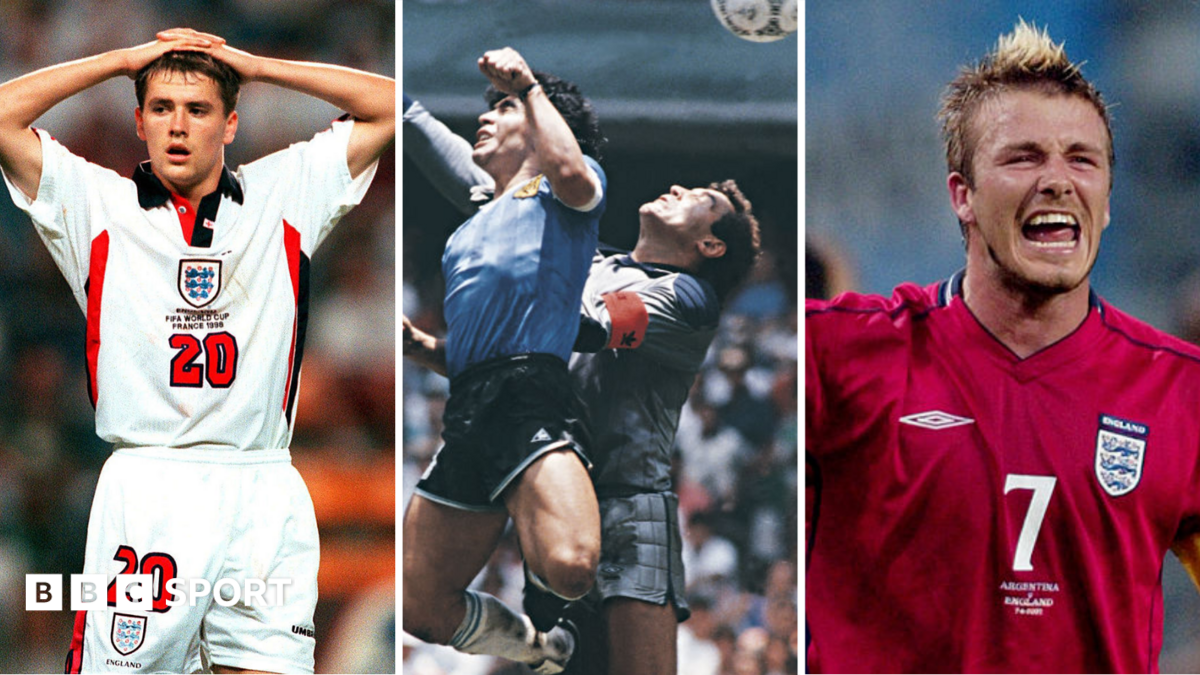
Ahead of a historic Atlanta clash, the defending champions face England for the first time with Lionel Messi, rekindling a six-decade feud.
Football fans around the globe are bracing for a generational showdown as England prepares to face Argentina in a highly anticipated World Cup final in Atlanta. This colossal fixture marks a significant milestone, as it will be the first time football icon Lionel Messi plays against the Three Lions in his illustrious career, adding another layer of intrigue to an already storied rivalry.
This particular World Cup encounter is more than just a game; it's the latest chapter in a deep-seated feud that stretches back over 60 years. Defined by iconic moments, stunning goals, bitter controversies, and a host of red cards, the rivalry also carries the weight of political tensions, notably influenced by the Falklands War in the 1980s. These geopolitical undercurrents often surface in chants and fan culture, intensifying the animosity on the pitch.
Despite the perception of Argentina's dominance in their most memorable encounters, it might surprise many that England actually holds a superior record in their five previous World Cup meetings. However, it has been quite some time since England secured a victory of truly significant consequence in this rivalry, with their last World Cup clash occurring in 2002, according to reporting by BBC Sport - Top Stories.
The Genesis of a Feud: England vs. Argentina's World Cup Origins
The rivalry between England and Argentina quietly began in 1962 in Rancagua, Chile, during a World Cup group stage match. England secured a 3-1 victory with goals from Ron Flowers, Bobby Charlton, and Jimmy Greaves, with Argentina netting a late consolation. Both teams finished with identical records in the group, but England advanced due to a better goal difference, eventually falling to Brazil in the quarter-finals.
Four years later, in 1966, the rivalry truly ignited during a fiery quarter-final at Wembley, England. Argentina still maintains that Geoff Hurst's winning goal was offside, claiming they were unfairly treated. The match descended into chaos when Argentina captain Antonio Rattin was sent off after just 33 minutes for two offenses within three minutes, including arguing with German referee Rudolf Kreitlein.
Rattin's refusal to leave the pitch caused an eight-minute delay, further fueling the animosity. England's victorious 1966 World Cup-winning coach, Alf Ramsey, famously described the Argentine side as 'animals' and forbade his players from exchanging shirts. Reflecting on the game in 2009, England defender George Cohen recalled the Argentine players' attempts to intimidate with "spitting and pulling the short hairs on your neck, pulling your ear."
Cohen expressed his disappointment, stating it was a "greatest shame that they didn't play the game they were capable of." This infamous match is also credited with spurring the introduction of red and yellow cards, first used in the 1970 World Cup, to better manage on-field discipline. Antonio Rattin, a veteran of the 1962 and 1966 World Cups, sadly passed away recently at the age of 89.
Maradona's Divine and Daring Goals: The 1986 England vs. Argentina World Cup Quarter-Final
The 1986 World Cup quarter-final in Mexico City remains arguably the most politically charged and controversial encounter. Played just four years after the Falklands War, the match became a symbolic battleground. Argentine media and fans viewed it as an opportunity to express their resentment towards the conflict, while British counterparts fueled nationalistic sentiments.
Lourdes Heredia of BBC World Service, who attended the game at the Azteca Stadium, recalled her parents' apprehension about the tensions. She quoted her father's concern about "princesses going" due to potential fan conflicts, contrasted by her mother's resolve for a "once in a lifetime opportunity."
The game delivered two unforgettable moments courtesy of Diego Maradona. The first, the infamous "Hand of God," saw Maradona punch the ball past England goalkeeper Peter Shilton into the net, completely unnoticed by the referee. Had VAR existed then, the goal would have been disallowed. However, Maradona quickly followed up with what many consider the greatest World Cup goal of all time, dribbling past half the England team before scoring to double Argentina's lead.
Heredia emphasized that while the Hand of God is often remembered, the second goal was "just spectacular - almost unbelievable." Gary Lineker managed a late consolation for England, but it wasn't enough, and they crashed out. Maradona eventually apologized for the handball in 2005, an apology famously rejected by Shilton. Argentina went on to lift the World Cup trophy that year, beating West Germany in the final.
Beckham's Infamous Red Card: A Defining Moment in England vs. Argentina's 1998 World Cup Battle
The rivalry continued its dramatic trajectory at the 1998 World Cup Round of 16 in St Etienne, France. This match is etched into football history for David Beckham's red card. After Gabriel Batistuta and Alan Shearer exchanged penalties, Michael Owen scored one of England's most breathtaking World Cup goals, bursting past the Argentine defense to give his side a 2-1 lead.
However, Argentina equalized before halftime with a clever free-kick from Javier Zanetti. The pivotal moment arrived when Beckham kicked out at Argentina's Diego Simeone, resulting in his dismissal. A year later, Simeone admitted the referee "fell into the trap" due to the tension and his dramatic fall. Despite being down to ten men, England bravely held on and even thought they had won when Sol Campbell headed home, only for it to be disallowed for a push.
The intensely contested match ultimately went to penalties, a familiar heartache for England. After misses by David Batty and Paul Ince, Argentina prevailed 4-3, though they were subsequently knocked out by the Netherlands in the next round.
Recent History and the Upcoming Atlanta World Cup Showdown
The last World Cup meeting between England and Argentina occurred in 2002, with England securing a victory. However, the source indicates it has been some time since England won a match in this rivalry that "really mattered." For younger generations, the intensity of this historic feud might be a new discovery, given the two nations haven't met on this stage in over two decades.
Now, with the stage set for Atlanta, the rivalry is poised for a fresh chapter. Argentina, the defending world champions, fought hard to reach this final, beating 10-man Switzerland in extra time. England, under Thomas Tuchel, has been described as 'lucky' and 'sloppy' in recent performances, prompting questions about whether their 'mentality' will be enough to overcome the South American giants and end 60 years of World Cup longing.
Frequently Asked Questions
When did England and Argentina first play in the World Cup?
England and Argentina's World Cup rivalry began in 1962 during the group stage in Rancagua, Chile, where England defeated Argentina 3-1.
What happened in the 1986 England vs. Argentina World Cup match?
The 1986 World Cup quarter-final saw Diego Maradona score two iconic goals: the controversial "Hand of God" handball and a breathtaking solo effort. Argentina won 2-1 amid significant political tension following the Falklands War.
Why was David Beckham sent off against Argentina in 1998?
David Beckham received a red card in the 1998 World Cup Round of 16 for kicking out at Argentina's Diego Simeone. Argentina went on to win the match on penalties.
Who leads the all-time World Cup head-to-head between England and Argentina?
Of the five World Cup matches played between the two nations, England holds the lead in their head-to-head record.
Will Lionel Messi play against England for the first time?
Yes, the upcoming World Cup final in Atlanta will mark Lionel Messi's first career appearance against the England national team.