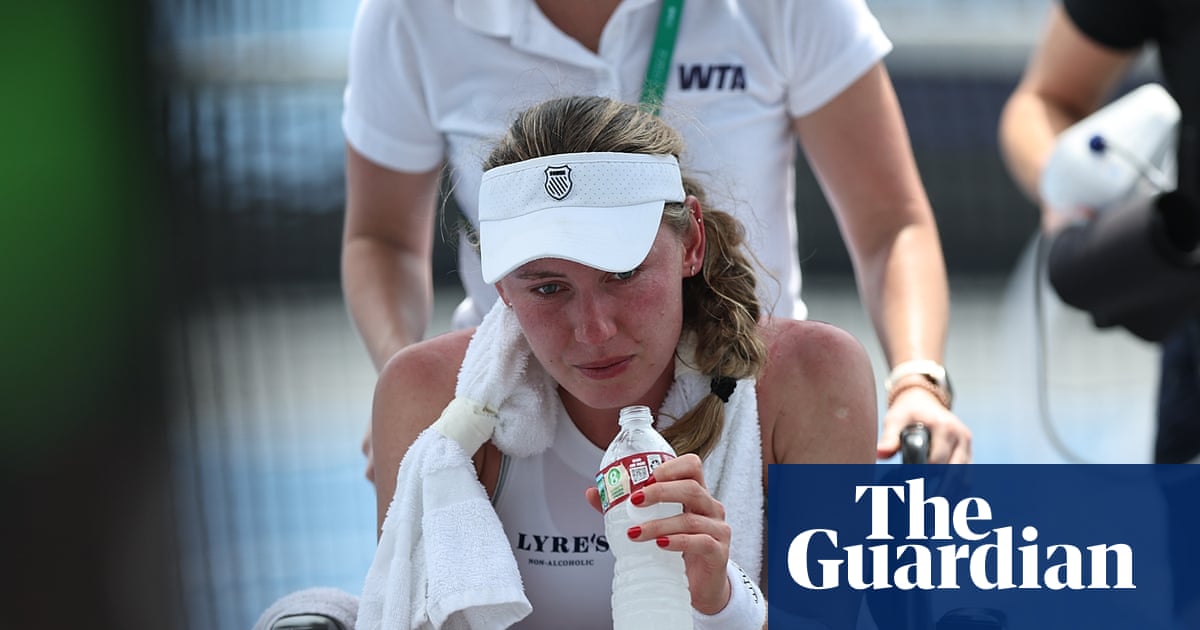
As record temperatures challenge athletes globally, experts warn of increasing risks and call for urgent strategic adjustments.
This summer has redefined the boundaries of endurance in elite sport, with unprecedented heatwaves sweeping across Europe, Asia, Africa, and North America. Athletes are facing extreme conditions that are not only impacting performance but also posing significant health risks, forcing a critical reevaluation of how competitions and training must evolve to ensure safety and sustainability.
Incidents of heat-related distress have become alarmingly common. Tennis players Ekaterina Alexandrova and Jakub Mensik notably collapsed on court, while cyclist Tom Pidcock controversially described the Tour de France as a “war zone” due to the challenging climate. Even referees, such as Ilgiz Tantashev, have suffered heat strain during high-stakes matches.
The gravest consequence arrived on August 7, when young Fijian rugby player Saimoni Vunilagi died of suspected heatstroke in Fukuoka, Japan, following training with his club, Kyuden Voltex, on a day when temperatures hit 35C. This tragic event underscores the urgent need for sports organizations to adapt to a world grappling with the effects of climate change, according to reporting by The Guardian - Sport.
The Brain's Limits and the Heat's Deception in Elite Sport
The human body's resilience is remarkable, but extreme heat presents a unique challenge to even the most prepared athletes. Alex Hutchinson, author of the bestseller Endure: Mind, Body, and the Curiously Elastic Limits of Human Performance, notes a significant shift in his understanding of heat's danger. Previously, serious heat-related incidents were considered rare, often confined to specific regions and lack of preparation.
However, Hutchinson now expresses greater caution. He explains that while the brain typically excels at protecting the body from collapse during exertion, heat is one of the few elements that can bypass these protective circuits. This deceptive nature of heat makes it particularly perilous for athletes pushing their physical limits, as their internal warning systems can be compromised.
Adapting Elite Sport for a Climate-Change World
The sports world must either transform its approach or face severe limitations, warns Dr. Lee Taylor from Loughborough University, a leading expert in preparing elite athletes for extreme environments. “The reality is that we live in a climate-change world,” Taylor states. “It’s inevitable, whatever sport you play, at whatever level, that more of that training and playing is going to be in a hot environment. So either we stop playing sport altogether or we adapt.”
Adaptation involves various strategies, from adjusting logistics and timings to enhancing player preparation, providing shade, and implementing cooling measures. While some adaptations, like mandated hydration breaks, were seen during the FIFA World Cup, they were often applied inconsistently. Despite a clear rationale to extend half-time breaks for player safety in games with a wet bulb globe temperature (a measure of heat stress) exceeding 32C, such flexibility was rarely granted, often due to commercial interests.
Heat as a Performance Opportunity (and Significant Risk) for Athletes
Paradoxically, heat can also be harnessed as a training tool for elite athletes, provided there is adequate preparation time. Experts like Dr. Lee Taylor view heat acclimatization as a potential performance advantage. Engaging in about six weeks of heat training can expand an athlete's hemoglobin mass by approximately 3% to 6%, an adaptation similar to altitude training and highly desirable for boosting endurance.
This means some clubs may even view unseasonal heat as a performance opportunity, strategically exposing players to gain these adaptations. However, this comes with significant risks. Athletes with undeclared sickness, prior viral loads, or certain medications face a dangerous combination when exercising in heat. Furthermore, events must be equipped with a “heat deck,” featuring appropriate medical expertise and facilities for rapid, aggressive whole-body cooling, which is considered the gold standard for treating potentially fatal exertional heat stroke.
The Unpredictable Future of Sports Weather and Athlete Safety
The most profound challenge facing elite sport today is the sheer unpredictability of future weather patterns. Dr. Lee Taylor highlights an existential problem: historical data, once a reliable guide for preparing for the worst-case scenarios in terms of humidity and heat, is no longer sufficient. “That’s gone out the window over the last five years because we have these crazy outliers,” Taylor explains.
This means that diligently preparing for known extremes is no longer enough; the future holds unexpected climatic variations that demand even greater flexibility and foresight in sports planning. The need for comprehensive, dynamic adaptation strategies has never been more critical for the health and survival of athletes and the sports they play.
Frequently Asked Questions
How does extreme heat affect elite athletes?
Extreme heat can trick the brain's protective circuitry, leading to collapses and heatstroke. It also compromises training quality and recovery, making intense exertion dangerous and potentially fatal for elite athletes.
What steps are being taken to protect athletes from heat?
Some adaptations include mandated hydration breaks, adjustments to logistics and timings, and improved player preparation. Experts also recommend advanced medical facilities like "heat decks" for rapid cooling in case of exertional heat stroke.
Can heat training improve athletic performance?
Yes, deliberate heat training over approximately six weeks can expand an athlete's hemoglobin mass by 3%-6%, offering similar performance benefits to altitude training. However, this must be done carefully to avoid health risks.
Why is it harder to prepare for heat in sports now than in the past?
Climate change has introduced unprecedented and unpredictable "crazy outliers" in weather patterns. Historical data is no longer reliable for planning, making it more challenging to anticipate and prepare for extreme heat conditions.