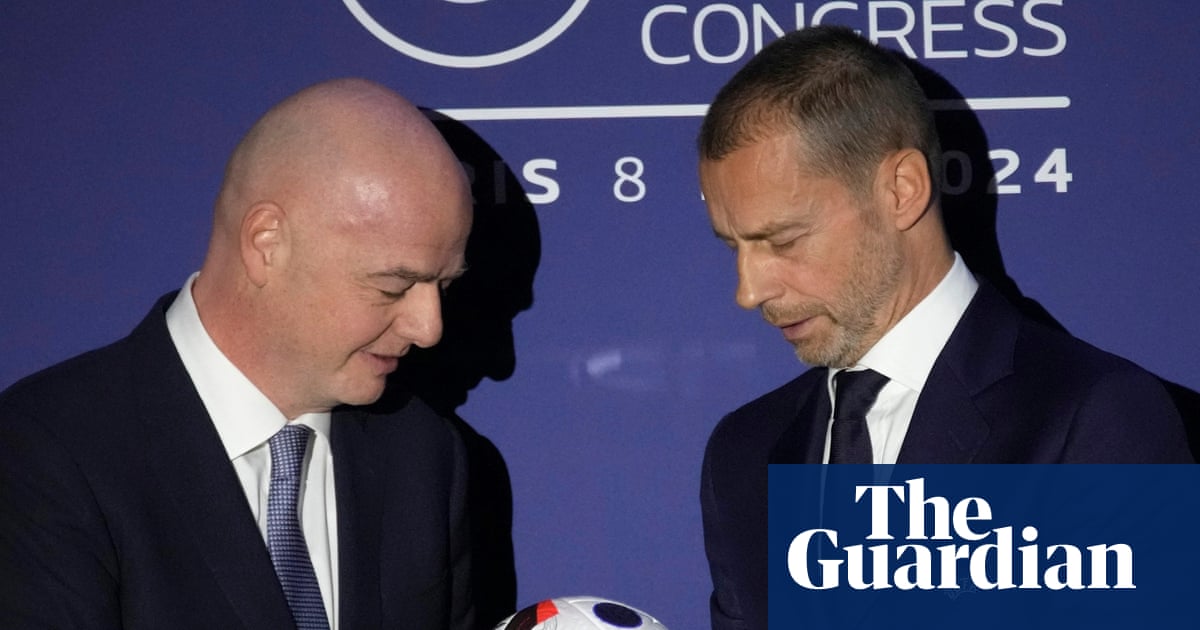
UEFA, Concacaf, and AFC seek to overhaul FIFA's 'system of patronage,' raising existential questions about governance, financial distribution, and the body's future role.
Three of the world's most powerful football confederations—UEFA, Concacaf, and the Asian Football Confederation (AFC)—are actively collaborating to create a new framework for global football governance. Their unified effort aims to dismantle what they perceive as a "system of patronage" that has shaped FIFA's operations.
This significant move challenges FIFA's current leadership, especially since Gianni Infantino became president a decade ago. It follows his repeated disregard for calls requesting an independent review of FIFA's governance.
The demand for scrutiny intensified just two weeks ago, after his plan to sell off 21% of the lucrative World Cup rights became public. Now, these influential football bodies are taking matters into their own hands.
They are developing a comprehensive policy document that will outline how the sport's global governing body could evolve. This action could impact next year's presidential election or even lead to the formation of a breakaway organization, according to reporting by The Guardian - Football.
Challenging FIFA's Current Governance Model
The confederations' joint initiative seeks to fundamentally redefine how FIFA operates. Those involved are empowered to ask "existential questions" about the organization's precise role, its optimal structure, and the most suitable governance model to ensure transparency and accountability.
Their concerns stem from a belief that FIFA has drifted towards a patronage system, which contrasts sharply with their vision for a more independently managed world football body. The failure to address the proposed World Cup sell-off with an independent review further fueled their resolve to act decisively.
Rethinking Financial Distribution and FIFA's Reserves
A critical component of the new framework focuses on financial distribution among FIFA's member associations. The confederations are particularly keen on ensuring the best possible deployment of funds from FIFA's substantial estimated $5 billion (£3.7 billion) reserves.
This emphasis on financial management highlights a desire for greater equity and strategic investment across all footballing nations. It aims to move away from what critics suggest is an over-centralized control of resources.
Potential Presidential Challenge and Boycott Threats Emerge
If Gianni Infantino opts not to engage with this proposed framework, it could very well be adopted by a challenger in next year's FIFA presidential election. Concacaf president Victor Montagliani is currently seen as the most likely candidate to oppose Infantino, though his immediate focus remains on securing re-election for his own confederation next year.
A joint statement released on Monday by UEFA, Concacaf, and the AFC carried a powerful message, advocating for "leadership that serves football, not seeks to command it." This statement notably echoed Montagliani's own words from the FIFA congress in Vancouver this year, where he declared, "Let me be frank, leadership is not about power."
The immediate repercussions of this escalating standoff are already visible. The Under-20 Women’s World Cup, scheduled for next month, could proceed without European teams. UEFA has indicated its members will boycott the tournament unless FIFA swiftly establishes an independent review of the World Cup sell-off controversy and provides legally binding assurances against similar future actions.
Considering New Competitions and a Breakaway Path
Beyond the presidential election, the new framework could also serve as a blueprint for a breakaway organization if deep-seated disagreements with FIFA's leadership persist. The three confederations have already initiated preliminary discussions about organizing entirely new competitions should the current impasse continue without resolution.
This bold consideration of alternative competitions underscores the seriousness of the challenge to FIFA's current authority. It suggests a clear willingness to explore all options to reshape the future of world football governance.
Frequently Asked Questions
What are Gianni Infantino's opponents doing to change world football governance?
Opponents, including UEFA, Concacaf, and the AFC, are developing a new policy document that proposes a comprehensive framework for running world football. They aim to replace what they see as FIFA's current "system of patronage."
Why are these confederations unhappy with FIFA's current leadership?
Their discontent stems from Gianni Infantino's perceived "system of patronage" and his repeated dismissal of calls for an independent review of FIFA's governance, especially after his plan to sell 21% of the World Cup was revealed.
What specific issues are being addressed in the proposed new framework?
The framework explores "existential questions" about FIFA's precise role, its structural organization, the ideal governance model, and crucially, how best to manage and distribute funds from FIFA's estimated $5 billion in reserves.
Who is seen as the most likely challenger to Gianni Infantino for the FIFA presidency?
Victor Montagliani, the Concacaf president, is currently viewed as the strongest potential challenger to Infantino in next year's FIFA presidential election, despite his immediate focus on his own confederation's re-election.
What immediate consequences could arise from this standoff?
The immediate consequence is a potential boycott of the Under-20 Women's World Cup by European teams next month unless FIFA agrees to an independent review of the World Cup sell-off debacle and provides legally binding assurances.