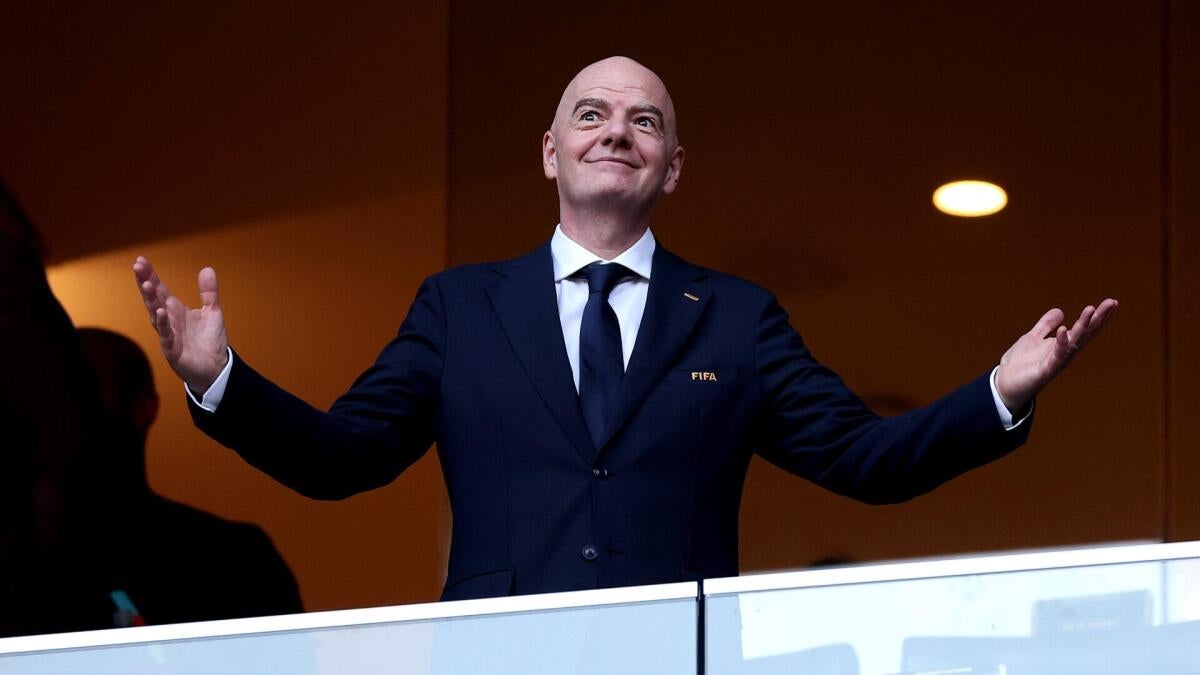
FIFA President Gianni Infantino's controversial proposal to sell stakes in the World Cup's commercial rights faces a global backlash, threatening the future of international football tournaments.
FIFA President Gianni Infantino, who is seeking re-election next year, is under intense scrutiny and growing opposition over his new FIFA Forward Enterprise (FFE) plan. This initiative proposes selling significant stakes in football's commercial rights to private investors, aiming to generate immediate financial benefits for global football development. However, the plan's core idea, which involves creating a subsidiary to manage FIFA's commercial rights, including broadcast, sponsorship, ticketing, and licensing, alongside tournament operations, has sparked widespread condemnation.
The backlash has been swift and severe, with major football confederations around the world voicing strong objections. European governing body UEFA has gone as far as threatening to boycott all FIFA tournaments if the FFE plan is confirmed. This mounting pressure is compounded by the resignation of a key advisor to Infantino, casting a shadow over the FIFA chief's leadership.
As the September 19 deadline for the proposed plan looms, the global football community watches closely. The controversy not only puts Infantino's position at risk but also ignites a critical debate about the governance and future direction of the sport's most prestigious competitions, according to reporting by CBS Sports - Soccer.
Global Football Confederation Backlash Against FIFA's FFE Plan
The proposed FIFA Forward Enterprise (FFE) plan has met with significant resistance from prominent football confederations, signaling a major challenge to Gianni Infantino's authority. Following an emergency meeting, UEFA, European football's governing body, immediately opposed the plan and declared it would boycott all FIFA tournaments should the proposal proceed.
Other major confederations quickly followed suit, including the Asian Football Confederation (AFC) and CONCACAF (the confederation for North, Central America, and Caribbean Association Football). With UEFA, AFC, and CONCACAF aligning against the proposal, the opposition now commands a significant voting block, representing 136 of FIFA's 211 member associations.
While the Mexican Football Federation chose not to outright reject the plan, stating it would make "the decision that is most appropriate," the collective stance of the other confederations underscores deep concerns about transparency and the financial motivations behind the FFE. The AFC emphasized that decisions of such magnitude must be developed through processes "anchored on transparency" and that this approach "undermines confidence in FIFA's governance framework."
Key Advisor Resigns Amid Deep Internal Concerns
Adding to the mounting pressure on Gianni Infantino, his senior advisor, Carlos Cordeiro, resigned in protest following the controversy surrounding the FFE proposal. Cordeiro, a former banker and ex-president of the United States Soccer Federation, issued a clear statement expressing his unequivocal opposition to the plan.
Cordeiro stated, "As a Senior Advisor to the FIFA President, a former banker, and a lifelong football fan, I cannot stand by while FIFA considers selling a stake in the World Cup." He clarified that he had "no involvement in this proposal" and deemed it "a bad deal for FIFA's Member Associations, a bad deal for football, and a bad deal for the long-term future of the game."
Internal dissent is also evident within FIFA itself. Chief operating officer Kevin Lamour spoke out against the plan, claiming staff were "deceived" by the project. Lamour courageously stated, "If that means I lose my job, so be it," according to Sky Sports, highlighting the profound concerns within the organization.
FIFA Defends FFE and Accelerates 64-Team World Cup Expansion
In response to the widespread criticism, FIFA issued a statement attempting to allay fears, asserting that they are not "selling football" as some critics, particularly UEFA, have strongly implied. The organization acknowledged the feedback from confederations regarding the FFE, expressing respect for the "concern aired in public" and reaffirming its commitment to an "open and democratic consultation."
FIFA suggested that its planned consultation process was "disrupted by incorrect media reports," and reiterated that the FFE proposal is intended to ensure all member associations have "meaningful ownership of the commercial opportunity of football" without compromising the spirit or governance of the sport. They declared, "Nobody is selling football. This is not something FIFA would ever entertain."
Amid this controversy, FIFA has also moved to accelerate the process for expanding the World Cup to a 64-team format from 2030. A brief was sent to expedite this decision, with an agency for analysis expected to be appointed by August 14, leaving just four weeks to complete the review before the FFE's September 19 deadline. This accelerated timeline has raised further questions about FIFA's decision-making process.
Political Scrutiny and Calls for Enhanced Governance
The pressure on Gianni Infantino is not confined to football's governing bodies, as political figures have also weighed in on the controversy. Andy Burnham, the new English Prime Minister, labeled the FFE proposal an "outrageous suggestion." Burnham added, "The idea that it could even be brought forward, in my view, shows that the FIFA general secretary is the wrong man to lead the organization," indicating a loss of confidence in Infantino's leadership.
The AFC's detailed statement further underlined the urgent need for institutional reform within FIFA. While refraining from a boycott, the Asian confederation called for decisions of such magnitude to be developed through transparent processes. They critiqued the current approach, noting that major stakeholders are often "confronted with significant initiatives after the direction of travel appears to have already been determined."
The AFC stressed that such an approach "undermines confidence in FIFA's governance framework and diminishes the authority of its statutory bodies." They concluded that this moment "must become a catalyst for strengthening institutional reform," advocating for timely consultation, informed deliberation, and genuine participation beyond mere voting opportunities to ensure meaningful democracy in football.
Frequently Asked Questions
What is FIFA's FFE proposal?
FIFA's FFE (FIFA Forward Enterprise) proposal involves selling significant stakes in the commercial rights of FIFA tournaments, including the World Cup, to private investors. The plan aims to create a new subsidiary to manage these commercial rights and operational delivery, generating immediate financial benefits for global football development.
Why are UEFA, AFC, and CONCACAF opposing the FFE plan?
These confederations oppose the FFE plan primarily due to concerns about a lack of transparency in its development, the potential for private financial interests to drastically change the sport, and what they view as an undermining of FIFA's governance framework. UEFA has even threatened a boycott of all FIFA tournaments if the plan proceeds.
What is the deadline for FIFA's FFE proposal?
The proposed deadline for the FIFA Forward Enterprise (FFE) plan is September 19. This date is critical as it marks a key vote and a potential turning point for the future of FIFA's commercial rights and tournament management.
Who is Carlos Cordeiro and why did he resign?
Carlos Cordeiro was a senior advisor to FIFA President Gianni Infantino, a former banker, and ex-president of the United States Soccer Federation. He resigned in protest over the FFE proposal, stating he opposed it unequivocally as a "bad deal for FIFA's Member Associations, a bad deal for football, and a bad deal for the long-term future of the game."
How would a 64-team World Cup affect international football?
A 64-team World Cup, which FIFA is accelerating plans for from 2030, would significantly expand the tournament. This would likely mean more participating nations, increased match schedules, and potentially longer tournament durations, altering the competitive landscape and logistical demands of international football.