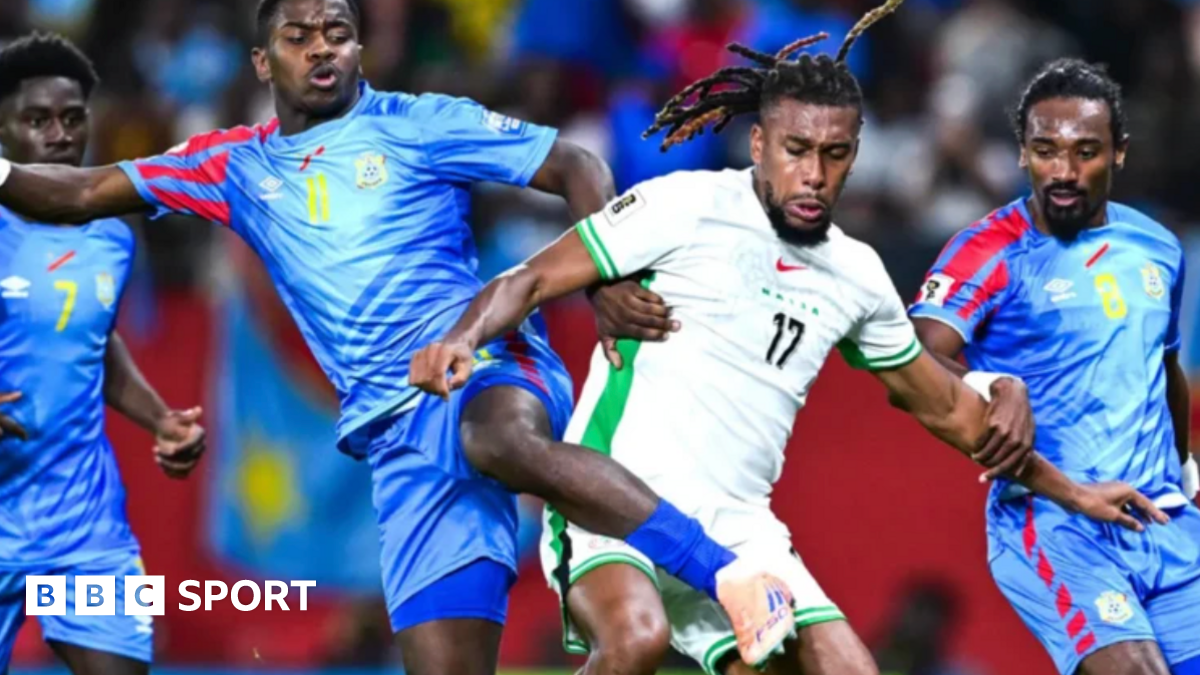
Nigeria faces scrutiny over DR Congo players' eligibility amid World Cup qualification tension
Fifa has fined Nigeria and DR Congo for misconduct during a key play-off match. The NFF was hit with $1,270 after failing to ensure 'order and security,' while Fecofa received a harsher $5,000 fine for using laser pointers.
The African play-off final in Morocco ended 4-3 on penalties, giving DR Congo a first World Cup qualifying spot since 1974. Nigeria's hopes of qualification were dented as they questioned the players' eligibility.
According to reporting by BBC Sport - Nigeria (Super Eagles)Fines for NFF and Fecofa
Nigeria Football Federation will have to pay a fine after fans threw objects during the match, violating Article 17.2.b of the code.
DR Congo was penalized much more heavily due to laser pointer usage in breach of Article 17.2.d, reflecting growing concerns over fan behavior and security.
Nigeria's Protest and Future Play-off
Nigeria lodged a formal protest against DR Congo's eligibility for several players who switched international allegiance. Nigeria argues domestic laws do not recognize dual citizenship for adults, questioning the eligibility of Premier League stars.
DR Congo's squad is ready to face the winner of the New Caledonia-Jamaica play-off on 31 March in a crucial intercontinental qualifier.
Nigeria’s Upcoming Challenges
(1) Is there any impact if FIFA upholds Nigeria's protest?
If DR Congo players are found ineligible, it could jeopardize their World Cup hopes and create controversy for the next qualifying round.
(2) Can other African countries also be affected by this decision?
Yes, as up to 10 nations could qualify in the expanded global tournament. The controversy adds complexity with less than two weeks until upcoming play-offs in Mexico.
Frequently Asked Questions
Can other African countries also be affected by this decision?
Yes, the expanded qualification process could see up to 10 nations qualify, adding more uncertainty and drama given Nigeria's protest and upcoming play-offs in Mexico on 31 March.