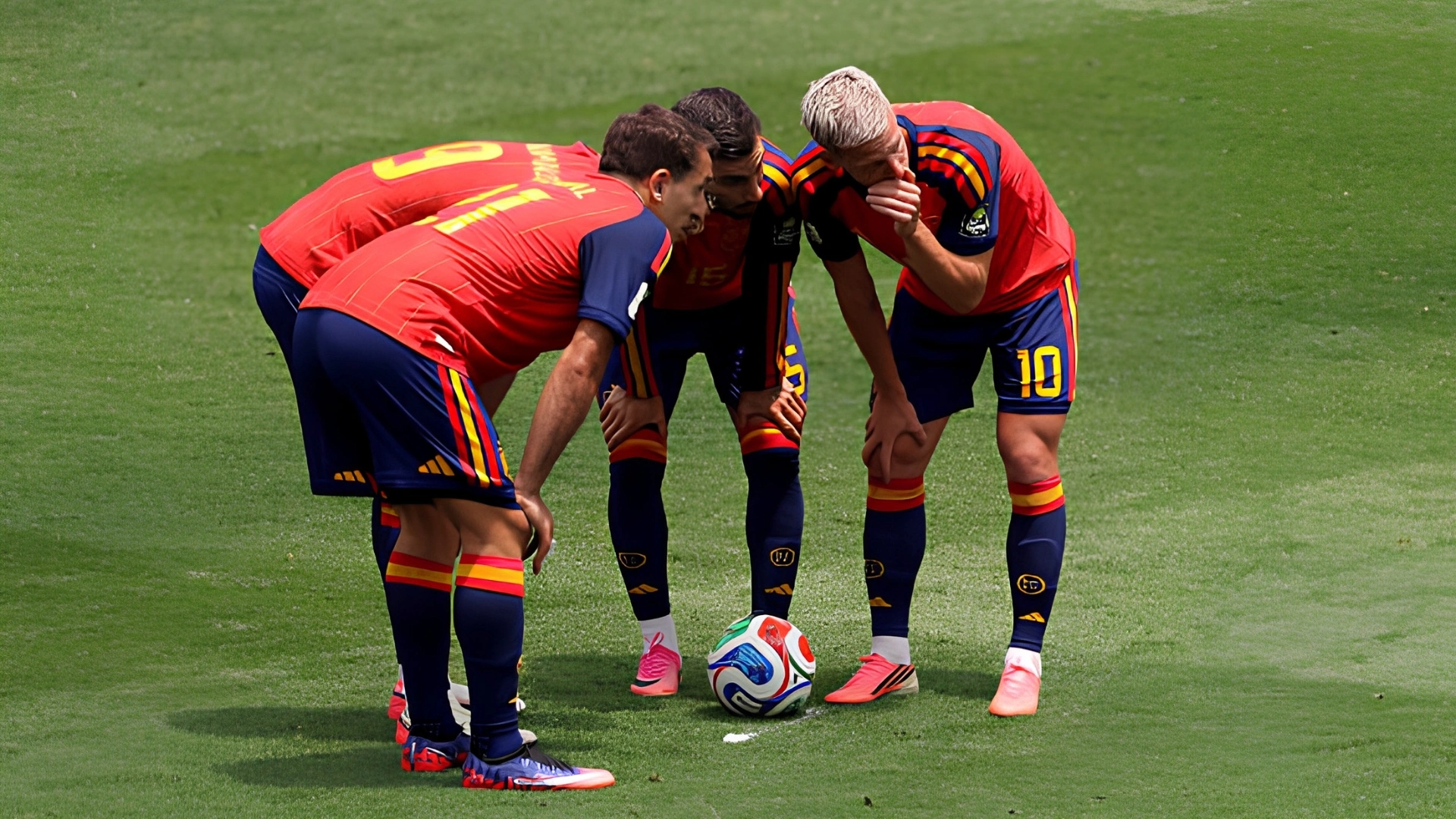
Expect a chess match of possession and counter-attack, as both nations aim to outwit rather than outshine their rivals on the biggest stage.
The upcoming FIFA World Cup 2026 semi-final clash between France and Spain promises to be more than just a display of dazzling football. While both squads boast incredible individual talent, the decisive factor may hinge on tactical discipline and mastery of the game's rhythm rather than sheer attacking flair. This high-stakes encounter is poised to be a battle of contrasting philosophies, with each team striving to impose its will.
France arrives at this crucial stage with the proven mentality of a tournament-winning team. They don't require full-throttle performance for 90 minutes to pose a threat, often absorbing pressure and patiently waiting for that one critical moment to secure a victory. This adaptability makes them exceptionally difficult to predict and even harder to eliminate from major competitions.
Conversely, Spain's strength lies in their meticulous control of the game's shape. By dominating possession and establishing a passing rhythm, they can force opponents into prolonged defensive efforts, creating fatigue and errors. The central question for this semi-final isn't merely which team possesses the better players, but rather who will effectively control the tempo, according to reporting by The Guardian Nigeria - Sport.
Who Will Dictate the Tempo in the Midfield Battle?
Should Spain successfully settle into their signature passing game early, France could find themselves spending significant periods without the ball. While this doesn't automatically weaken the French side, it undeniably alters the emotional equilibrium of the match. Spain thrives when the game is structured and ordered, meticulously moving the ball to open spaces and create opportunities.
On the other hand, France often excels when traditional order breaks down, thriving in moments of chaos and rapid transition. Their primary danger lies in turning a misplaced pass into a lightning-fast direct attack within seconds. Superstar Kylian Mbappé remains an obvious threat, but France’s offensive power extends beyond any single player. They possess the ability to stretch the field, exploit open spaces, and force opposition defenders into critical, split-second decisions.
Therefore, Spain must handle possession with extreme caution and security. Simply keeping the ball won't suffice; they must protect it meticulously. A poor turnover in midfield against France isn't just a mistake; it could swiftly become the difference between a place in the World Cup final and an agonizing exit.
France's Lethal Counter and Spain's Suffocating Control
Despite their opportunistic nature, France cannot rely solely on individual moments of brilliance throughout the match. Against a possession-dominant team like Spain, prolonged periods without the ball can become genuinely perilous. Such a scenario invites sustained pressure, leading to dangerous corners, free-kicks, and a loss of territorial control, ultimately testing the concentration of every player. A single lapse in focus during a semi-final can define an entire tournament campaign.
For instance, players like Yeremy Pino, Lamine Yamal, Alex Baena, and Dani Olmo, who featured in Spain's FIFA World Cup 2026 Quarter Final match against Belgium at Los Angeles Stadium on July 10, 2026, are adept at sustaining offensive phases. Similarly, Kylian Mbappé's ability to dribble past defenders, as seen against Morocco at the Boston Stadium on July 9, 2026, highlights France's immediate threat.
Why Midfield Control Will Edge Out Star Attackers
While much of the pre-match buzz will understandably revolve around the prolific attackers from both nations, the most decisive area of play may prove to be the middle of the pitch and the zones just outside both penalty areas. Spain will strategically aim to disorganize France’s midfield, create crucial passing lanes, and draw defenders into uncomfortable positions, opening up their rigid structure.
Conversely, France will patiently search for that precise moment when Spain’s typically stable structure becomes stretched and vulnerable. This intricate tactical tension forms the core narrative of this highly anticipated encounter. Ultimately, the match should be viewed as a contest pitting methodical control against explosive opportunism. Spain might dominate possession statistics, while France could carry the more obvious threat in sudden, rapid bursts. Neither condition automatically guarantees victory; success at this stage of the World Cup often goes to the team that best understands when to press, when to wait, when to slow the game down, and when to strike decisively.
Frequently Asked Questions
When and where is the France vs. Spain World Cup semi-final taking place?
While the exact date and stadium for the FIFA World Cup 2026 semi-final between France and Spain are not specified in the current reporting, previous tournament matches for these teams, such as Spain's quarter-final at Los Angeles Stadium on July 10, 2026, suggest a North American host region.
What is France's key strategy in tournament football?
France is known for its ability to understand tournament football, often winning matches without needing to play at full intensity for 90 minutes. Their strategy involves absorbing pressure, patiently waiting for decisive moments, and capitalizing on opportunities to secure results.
How does Spain typically approach its matches?
Spain traditionally relies on a possession-based football culture, aiming to control the tempo of the match through precise passing and rhythm. This approach forces opponents to defend for extended periods, chasing spaces and making decisions under fatigue until their gentle-looking football becomes suffocating.
Who are some key players to watch in the France vs. Spain match?
For France, the electrifying forward Kylian Mbappé remains a primary threat. For Spain, players like Yeremy Pino, Lamine Yamal, Alex Baena, and Dani Olmo are integral to their possession-based attack and creative play.