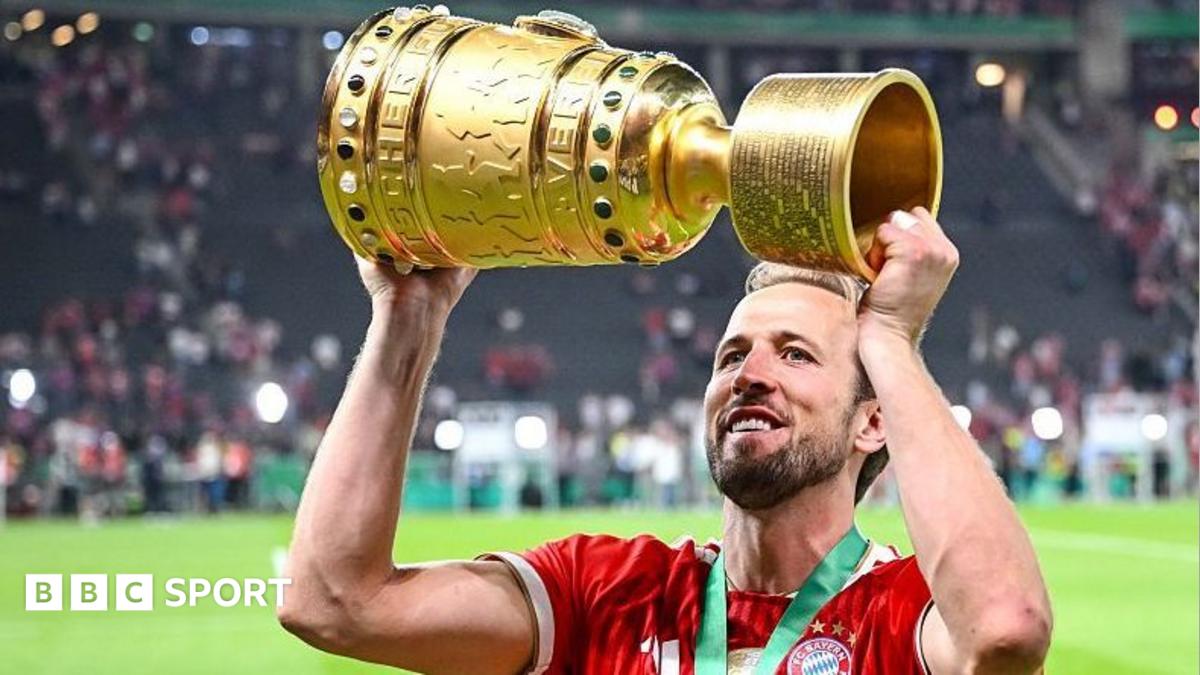
The Bayern Munich and England captain explains how his deep-lying style, mixing instinct with tactical awareness, unlocked a career-best 73 goals last season.
Harry Kane’s remarkable career has seen him evolve into one of football’s most complete strikers, often collecting the ball from incredibly deep positions, sometimes even near his own penalty area. This unconventional approach has frequently prompted questions from fans and pundits alike, who typically expect a talismanic goalscorer to operate closer to the opponent’s goal.
Despite this deeper role, the England and Bayern Munich striker achieved his highest-ever goal tally last season, netting an astonishing 73 goals. This paradox, where increased distance from goal directly correlates with a surge in scoring, highlights a sophisticated understanding of the game that Kane is keen to elaborate on.
Kane himself addresses this intriguing contradiction, emphasizing that simply "staying high" doesn't guarantee goals in modern football. He recently sat down to dissect the intricate details of his unique style, shedding light on the strategic decisions and physical demands behind his record-breaking form, according to reporting by BBC Sport - Football.
Defying Traditional Striker Expectations
Many observers find it counterintuitive that a striker renowned for his finishing would consistently drop deep. Kane acknowledges this perception, stating, "Until you really understand football and understand what we've been talking about, it's so easy to say 'stay high, you're going to score' but it doesn't work like that."
His dedication to the game is evident; during training, Kane's professionalism is palpable, often among the first players on the pitch. His calm demeanor and engagement with staff sometimes make him seem more like a coach than a player, a fitting observation given his influential role on the field.
Such a demanding, roaming position requires immense physical output. Data from STATSports, a technology company Kane has invested in, shows his physical metrics have significantly increased over the past six seasons. His distance covered is up 8%, high-speed running by 22%, and accelerations by an impressive 42%.
Adapting to Modern European Football
The tactical landscape of European football has shifted dramatically, with a growing emphasis on aggressive, man-to-man pressing. Kane notes this change, explaining, "Over the last five or six years, man-to-man pressure has become bigger... top teams are trying to win the ball back high, trusting their defenders and midfielders to defend man for man to win their battles."
While many elite teams recruit rapid, brilliant dribblers to navigate these one-on-one scenarios, Kane, by his own admission "not the fastest" and "not known for his dribbling," has thrived on his own terms. His intelligence and strategic movement compensate for a lack of blistering pace.
Against Borussia Dortmund in a 2-1 German Super Cup win, Kane exemplified his cerebral approach. Dropping deep to find space, he drew two opponents, including center-back Waldemar Anton. Using strength and subtle body adjustments, he created an opening by feinting past Daniel Svensson and Jobe Bellingham, effectively unlocking the entire pitch from within his own half.
The Freedom of the 'Two 10s' Role
Bayern Munich coach Vincent Kompany has described Kane's distinctive role as "50% coached and 50% Kane deciding what to do." Kane agrees, attributing it to a blend of instinct and game intelligence. "After the first five or 10 minutes you really get an understanding of how the opposition are going to play, which dictates how I play," he explains.
Kane now sees himself operating as "one of two 10s" rather than a lone number nine. This shared understanding within the Bayern squad allows for seemingly random rotations to make tactical sense, with Kane often at the heart of this fluid system.
This setup creates strategic overloads, posing a dilemma for opposition center-backs on who to mark. If defenders commit man-to-man, it frees up space for wingers or full-backs to exploit. Kane emphasizes, "It's posing all these questions to the opposition but, personally, I love having someone close to me who I can link with."
Mastering the Art of Deep-Lying Goalscoring
Kane's deep-lying movements are often a precursor to his goals. In one instance, as he dropped to create space, a midfielder was pulled towards him, allowing Joshua Kimmich to deliver a pass to Luis Diaz. With Serge Gnabry's run drawing defenders back, Kane arrived in a dangerous "number 10 spot" to unleash a shot.
He often finds himself in scoring positions around 20-25 yards out, a significant strength of his game. By initially playing deep, he allows the play to develop before arriving unmarked on the edge of the box or making runs off the back of players, where midfielders struggle to track him.
Even when not directly scoring, his influence is profound. In a Champions League match against Club Brugge, Kane's movement drew a holding midfielder, creating space for Lennart Karl to score without Kane touching the ball. He adapts his game to complement teammates like Jamal Musiala and Karl, knowing when to stay high for runs in behind or when to drop and let them operate deeper.
Frequently Asked Questions
How did Harry Kane score 73 goals last season?
Harry Kane achieved a career-high 73 goals last season by evolving his game into a deeper, more comprehensive role. This allowed him to create space for teammates, link play, and then arrive unmarked in dangerous scoring positions from the edge of the box, often functioning as a second number 10.
Why does Harry Kane play a deeper role?
Kane plays a deeper role to adapt to modern football's increased man-to-man pressure and to exploit space. He believes it's more effective than just "staying high" and allows him to influence the game more, creating tactical dilemmas for opposition defenders by drawing them out of position or creating overloads.
What physical demands does Harry Kane's role require?
Despite playing deeper, Kane's role is physically demanding. Data from STATSports reveals that over the past six seasons, his distance covered increased by 8%, high-speed running by 22%, and accelerations by 42%, demonstrating his exceptional fitness and ability to maintain intensity.
How does Harry Kane's deeper role benefit his teammates at Bayern Munich?
Kane's deeper positioning creates space for teammates like Luis Diaz, Jamal Musiala, and Lennart Karl to run into or receive the ball. By drawing defenders, he allows wingers and full-backs to exploit gaps, and his ability to link with "two 10s" overloads one side, posing significant questions for the opposition defense.