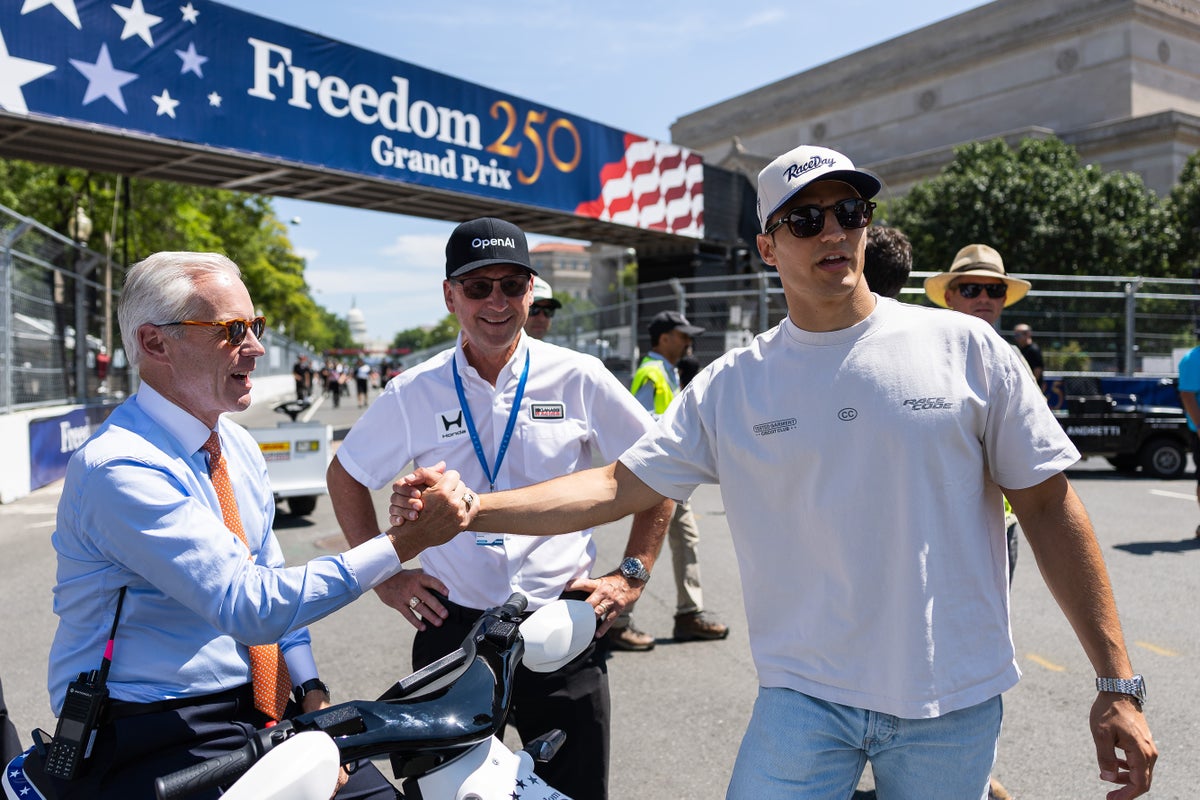
The Freedom 250 Grand Prix offers a dream-like street circuit experience for racers, contrasting with D.C.'s limited motorsports past.
IndyCar drivers are expressing profound awe and excitement as they prepare to compete in the historic Freedom 250 Grand Prix in Washington D.C. The unique street circuit, set against the backdrop of the U.S. Capitol building and numerous national monuments, is being described as a once-in-a-lifetime opportunity for the sport.
For many, this event marks an unprecedented moment for IndyCar racing, offering a level of visibility and a setting that rivals even the legendary Indy 500. Drivers like Kyle Kirkwood and Rinus VeeKay highlight the privilege of racing through such a historically significant urban landscape, creating memories they consider "stuff that you dream of."
This weekend’s race is more than just a competition; it’s a celebration coinciding with the nation's 250th birthday. It highlights Washington D.C.'s emergence as a host for major sporting events, drawing significant attention to the open-wheel series, according to reporting by The Independent - Sport.
A Dream Circuit Amidst American History
Competing on a circuit framed by the U.S. Capitol is a truly remarkable experience, even for seasoned IndyCar veterans. Driver Kyle Kirkwood enthusiastically declared it the “best that we’ve ever had” among the many cool cities IndyCar visits. He emphasized the honor of racing past iconic landmarks like the Capitol building, the numerous museums, and the distinctive architecture surrounding the track.
Rinus VeeKay, a Dutch driver who recently obtained his green card, found the experience particularly enlightening. He noted how cool it was to be “learning so much about it here, seeing all the monuments and museums,” and observing how every building in the city seemed to hold a special purpose. For VeeKay, seeing the White House from the track was like something out of a movie.
Unprecedented Visibility for IndyCar
The Freedom 250 Grand Prix is providing IndyCar with a welcome moment in the spotlight. Kyle Kirkwood openly shared that the “media covering us” has been the coolest part of the week, acknowledging that opportunities for such widespread attention are rare outside of the Indy 500. He described the D.C. event as being “sought after as much as the 500,” highlighting its special significance for the series.
Josef Newgarden, a driver for Team Penske, expressed his hope that the race would bring “great visibility” to IndyCar racing. He believes this event could introduce the sport to new audiences who might not be familiar with it. Series owner Roger Penske, who received the Presidential Medal of Freedom in 2019, was instrumental in organizing this historic race in the District of Columbia.
Navigating the Iconic D.C. Streets
The Washington D.C. street circuit is a challenging yet captivating design. The 1.7-mile track features seven turns, making it the second-longest street circuit race in IndyCar history by total distance at 250 miles (147 laps). Drivers navigate a lengthy straightaway along Pennsylvania Avenue after Turn 1, heading northwest from the Capitol.
The course then includes a sharp left turn between the National Archives and the main Justice Department building, followed by quick 90-degree turns to handle the city’s grid system. After crossing the National Mall, drivers turn onto Independence Avenue, passing the Smithsonian’s National Air & Space Museum and the Eisenhower Memorial before reaching the finish line west of the Capitol. Driver Marcus Armstrong noted its "short and snappy" nature, acknowledging the unknowns, including potential wet conditions and slippery crosswalks on race day.
A New Chapter in D.C. Motorsports History
Washington D.C. has a limited history with high-level motorsports. A previous event, the American Le Mans Series, took place in 2002 at RFK Stadium’s parking lot on the city's east side. However, the Freedom 250 Grand Prix represents a significant leap, taking place directly downtown in one of D.C.’s prime tourist areas.
This downtown location, with landmarks like the Air & Space Museum and National Gallery of Art within the course’s perimeter, offers a spectacular setting. The track, while shorter and with fewer turns than some other IndyCar circuits, is comparable to the 1.6-mile, nine-turn circuit used in downtown Detroit, promising intense racing action for fans.
Frequently Asked Questions
What is the Freedom 250 Grand Prix?
The Freedom 250 Grand Prix is a historic IndyCar street circuit race held in Washington D.C., organized to mark the nation’s 250th birthday celebration. It features top open-wheel drivers competing on a unique urban track.
Which IndyCar drivers commented on the D.C. race?
Drivers Kyle Kirkwood, Rinus VeeKay, Josef Newgarden, and Marcus Armstrong were quoted expressing their thoughts on the Washington D.C. event, highlighting its unique setting and significance.
What is unique about the Washington D.C. IndyCar track?
The 1.7-mile, seven-turn street circuit is set against iconic landmarks like the U.S. Capitol, National Mall, and various museums. It includes sections of Pennsylvania Avenue and Independence Avenue, making it a visually stunning and historically significant course.
Who organized the IndyCar race in Washington D.C.?
IndyCar series owner Roger Penske led the effort to bring the Freedom 250 Grand Prix to Washington D.C., with the event being the second major sporting celebration hosted by President Donald Trump for the nation's 250th birthday.