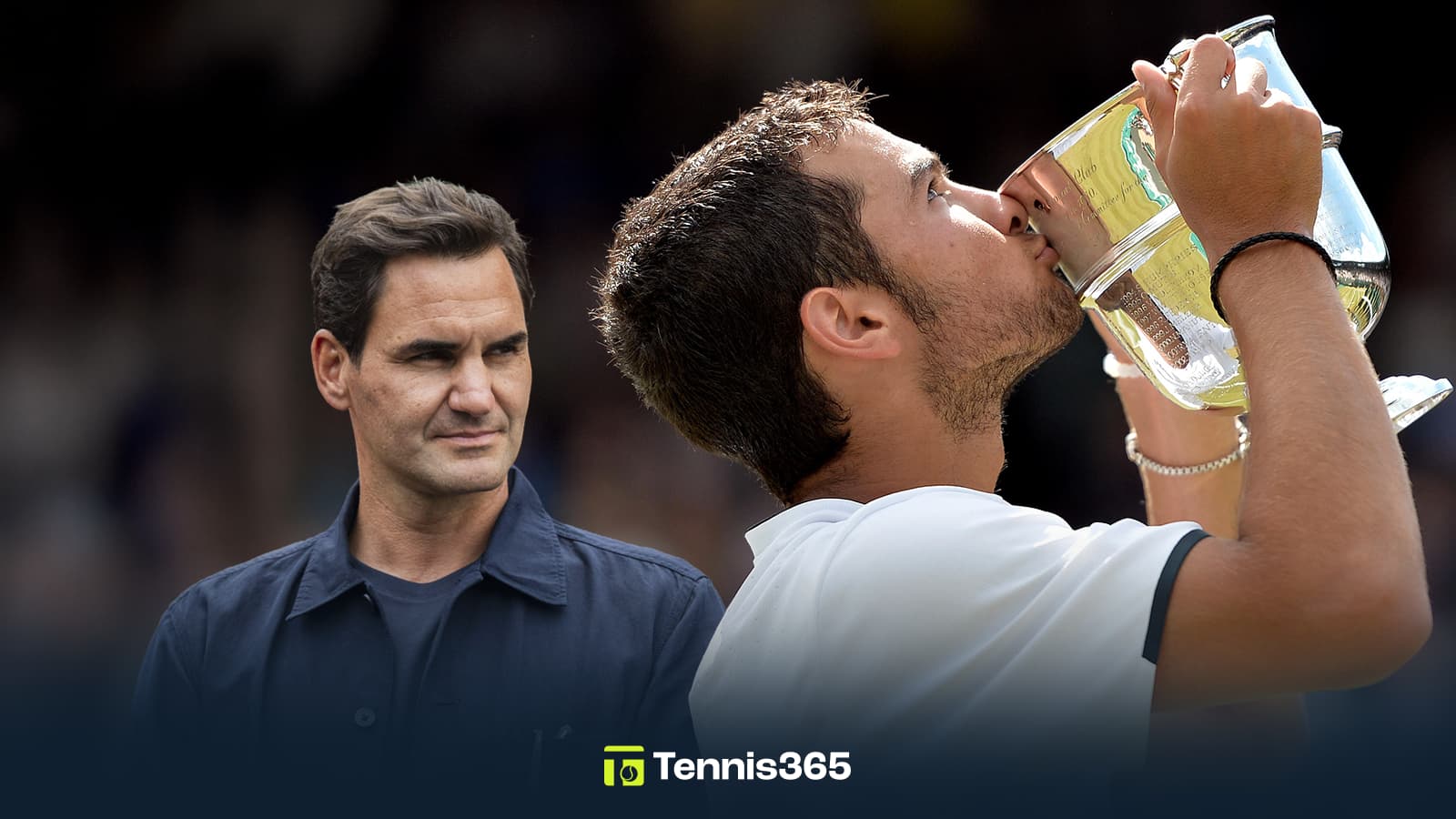
Noah Rubin, once hailed as a prodigy by John McEnroe, reveals the immense pressure, financial burdens, and injuries that often define life for aspiring tennis pros.
Noah Rubin once seemed destined for tennis stardom, praised by none other than John McEnroe as the “most talented player we’ve come across” at his Academy at the tender age of 15. Rubin rose to become the No. 1 junior in the United States, climbed to sixth in the world junior rankings, and notably captured the 2014 Wimbledon Boys’ singles title at 18.
Despite these early successes, the path to becoming a professional tennis player was fraught with hidden challenges far removed from the spotlight of Grand Slam courts. Rubin's journey unveils a stark reality of loneliness, immense financial strain, and the physical toll exacted by the sport.
His candid reflections shed light on the unseen battles behind the glamour of professional tennis, from navigating career choices in a pre-NIL era to battling injuries and the constant threat of burnout, according to reporting by Tennis365.
From Prodigy to Junior Champion: The Weight of Expectation
After being identified by John McEnroe's Academy on Randall’s Island in Manhattan, Noah Rubin quickly ascended through the junior ranks. He achieved significant milestones, including becoming the top junior in the US and winning the prestigious Wimbledon Boys' singles title in 2014.
Rubin acknowledged the substantial pressure that came with being "the face of the John McEnroe Tennis Academy" and playing in New York. He reflected, “I was playing pretty well, had a good junior career,” despite feeling the weight of expectations. His Wimbledon junior victory, an “amazing” experience, came after McEnroe himself had to convince him to play, traveling to London just 24 hours before his first qualifying match.
The junior Wimbledon final, an all-American clash against Stefan Kozlov on No. 1 Court in front of 10,000 fans, further amplified expectations. Despite these achievements, Rubin felt he had explored all there was to junior tennis and contemplated whether to turn professional, a decision complicated by the then-existing rules for junior Grand Slam winners.
College vs. Pro: Navigating the Shifting Landscape of Tennis Careers
Following his Wimbledon triumph, Rubin won the singles and doubles titles at the U.S. Tennis Association’s Boys 18s National Championships. However, instead of immediately turning professional, he accepted a scholarship to Wake Forest University in North Carolina.
This decision, made before the 2021 Supreme Court ruling that enabled college athletes to earn compensation for their Name, Image, and Likeness (NIL), was less common at the time. Rubin explained, “I made the decision to go to college at that point in time, which wasn’t as popular because we didn’t have the NIL deals that we have today.” He was one of the first tennis players to utilize a “one year out” rule, allowing him to potentially return to finish his degree.
The landscape of college tennis has drastically changed, with students now securing lucrative brand endorsements. Rubin noted, “Now, we’re at this point where guys are getting paid more to play college tennis than they are to play professionally,” highlighting the significant shift since his college years.
The Brutal Reality of Turning Pro: Financial Strain and Physical Toll
Rubin officially turned professional in June 2015 at the age of 19. His early professional career saw him win the Charlottesville Challenger and earn a wildcard to the 2016 Australian Open, where he upset the 17th seed Benoit Paire before falling in the second round.
However, the financial burden of professional tennis quickly became apparent. Rubin estimated annual expenses for travel, massages, and equipment at $50,000 to $75,000 (approximately £37,000-£55,000), not including the salaries for a coach or physio. In his best year, 2018, these costs stretched to around $200,000 (approximately £147,000).
Beyond the financial strain, injuries were a constant challenge. Rubin battled a broken wrist, high ankle sprains, and a minor fracture in his right ankle, each sidelining him for months and requiring significant self-funded rehab. He reached a career-high ranking of 125 in October 2018 after fighting back from injuries, but by age 22, the relentless grind led to burnout, with Rubin recalling instances of “crying hysterically with the lights off” after losses.
McEnroe's Influence and Post-Career Reflections
Despite their unique dynamic, Rubin holds no animosity towards John McEnroe, clarifying that McEnroe was not his coach. He described their relationship as one where he tried to glean "little titbits here and there" from a player who had reached the highest echelons of tennis.
Rubin reflected on McEnroe’s evolving communication style, noting, “I think throughout his career off the tour, he’s kind of learned how to portray messages differently and feel more comfortable explaining his thought process.” He acknowledges that their coaching mesh wasn't perfect early on for McEnroe.
Looking back, Rubin admitted to romanticizing tennis but is often reminded by his wife of the difficulties endured. While acknowledging incredible moments and opportunities, his story serves as a powerful testament to the often-unseen struggles behind the glamorous facade of professional sports.
Frequently Asked Questions
Who is Noah Rubin in the world of tennis?
Noah Rubin is an American tennis player who gained prominence as the No. 1 junior in the United States and won the 2014 Wimbledon Boys' singles title. He was notably praised by John McEnroe as a prodigy at a young age.
What did John McEnroe say about Noah Rubin?
At the age of 15, John McEnroe hailed Noah Rubin as the “most talented player we’ve come across” at his Academy on Randall’s Island in Manhattan, recognizing his exceptional potential.
What are the financial challenges faced by professional tennis players?
Professional tennis players, like Noah Rubin, face significant financial burdens. Annual expenses for travel, equipment, and medical care can range from $50,000 to $75,000, potentially reaching $200,000 in a successful year, often without guaranteed salaries or coverage for injuries.
Why did Noah Rubin choose college instead of immediately turning professional?
Noah Rubin chose to attend Wake Forest University on scholarship after his junior success because, at the time, NIL deals (Name, Image, and Likeness compensation) for college athletes did not exist, making the immediate professional path less financially secure than it is today for some.
What physical toll did professional tennis take on Noah Rubin?
Rubin experienced several significant injuries, including a broken wrist, high ankle sprains, and a minor fracture in his right ankle. These injuries kept him off the court for months and required extensive, self-funded rehabilitation, making his return to high rankings a "massive effort."