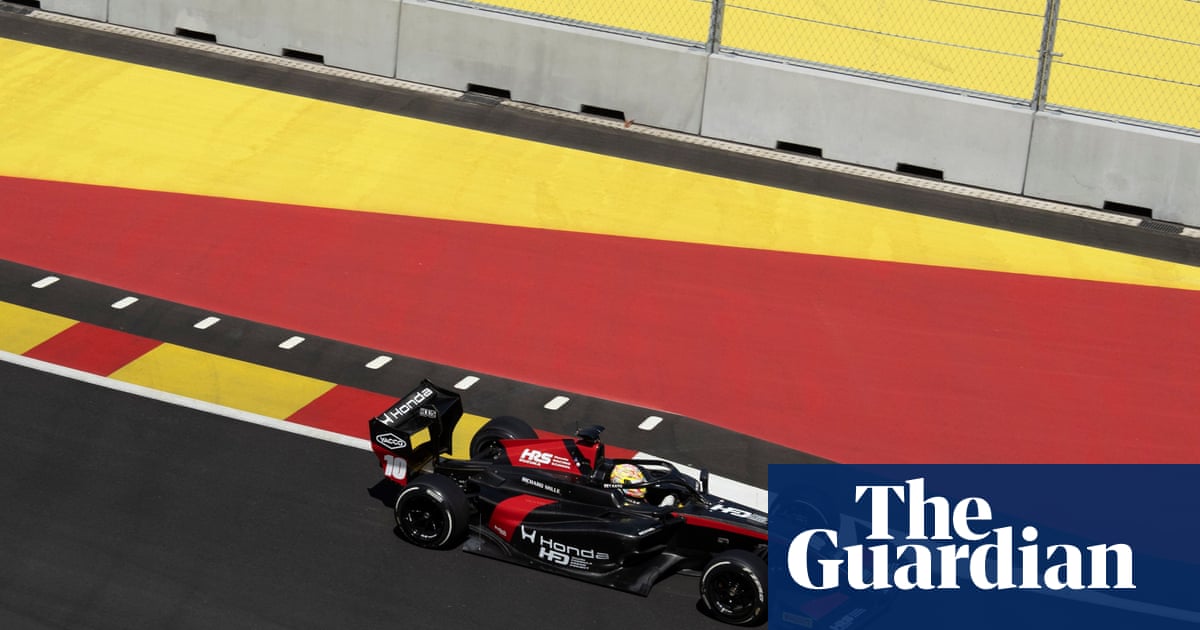
Track tests for Madrid’s inaugural Spanish Grand Prix have recorded decibel levels far exceeding legal limits, sparking outrage among residents.
Madrid residents are bracing for significant noise and disruption as the city prepares to host its inaugural Formula 1 Spanish Grand Prix, with a newly constructed circuit drawing sharp criticism. Local opponents claim regional authorities are prioritizing profit over public wellbeing, especially after recent track tests revealed alarming noise levels.
The 5.4-kilometer (3.3-mile) Madring circuit, built in the Spanish capital's northeast at a cost of €83 million (£71 million), aims to attract tourists, boost the local economy, and establish Madrid on the global motor racing map. However, preliminary tests using Formula 3 cars have ignited a fierce debate.
These tests, conducted in anticipation of the Grand Prix on September 11-13, yielded noise levels that were many times the legal decibel limit for residential areas, leading to calls for legal action from a concerned citizens' group, according to reporting by The Guardian - Formula 1.
Madrid F1 Circuit Noise Levels Spark Local Outrage
Local platform Stop F1 Madrid, formed a year ago, reported average noise levels of 102.7 decibels during recent track tests. Peaks during these tests soared even higher, reaching between 107.7 and 109.1 decibels. This starkly contrasts with the maximum permissible noise level of 55 decibels in residential zones, highlighting the severity of the residents' concerns.
Antonio Ibáñez, a spokesperson for Stop F1 Madrid, emphasized that the issues extend beyond just noise and dust. Ibáñez shared complaints from residents who found it impossible to work remotely during the tests. Furthermore, he noted, “We’ve also spoken to people who have children with autism and they had to get them out of the area because of [all the distress],” underscoring the profound impact on vulnerable community members.
The group’s worries also center on the sheer volume of attendees expected for the Grand Prix itself, anticipating immense pressure on public transport and surrounding local services. Ibáñez flatly called an “urban Formula One circuit” a “bad idea,” dismissing it as a “nonsense idea.”
Madrid Authorities Promote Economic Gains from New F1 Track
In response to the growing local outrage, Madrid's regional and city authorities are working to reassure residents and underscore the economic advantages of the new Formula 1 track. Borja Carabante, Madrid’s city councillor for urban planning, mobility, and the environment, detailed plans to implement measures like acoustic panels to minimize noise during the Grand Prix.
Carabante also stated that the Formula 3 cars used for initial testing “make and emit more noise than Formula One cars,” suggesting that the actual Grand Prix event on September 13 would be less noisy than the tests. He affirmed the city council's commitment to minimizing traffic disruption, urging residents to embrace the event.
Carabante expressed pride in Madrid hosting such a significant event, stating, “We should be congratulating ourselves that Madrid is hosting such an important and significant event that will put us at the epicentre of great sporting events.” He called it “amazing news for all the people of Madrid and it’s putting Madrid on the map.”
Adding to this, Jorge Rodrigo, the regional minister for housing, transport, and infrastructure, highlighted the immense economic benefit for Madrid. He suggested that “a little bit of sacrifice from all of us” for one weekend would be well worth it, given the event's profitability and its role in positioning Madrid internationally.
A spokesperson for the Madring circuit affirmed that organizers are taking “all measures within our reach to minimise the disruption caused by the construction work and the event.” The spokesperson stressed that “protecting the wellbeing of local residents and reducing the environmental impact are a priority for the organisers.”
Frequently Asked Questions
What are residents’ primary concerns about the new Madrid F1 circuit?
Local residents are primarily concerned about excessive noise levels, reporting average noise of 102.7 decibels during tests (far exceeding the 55-decibel legal limit), along with disruption to daily life, issues for children with autism, and potential strain on public transport and local infrastructure during the Grand Prix.
How much did the Madring F1 circuit cost to build?
The new Madring circuit, located in northeast Madrid, cost €83 million (£71 million) to construct. Authorities hope this investment will attract visitors and boost the local economy by placing Madrid on the global motor racing map.
What measures are authorities taking to address noise complaints for the Spanish Grand Prix?
Madrid city councillor Borja Carabante stated that measures such as acoustic panels will be installed to minimize noise during the Grand Prix. He also noted that Formula 3 cars used in tests are louder than Formula 1 cars, suggesting less noise during the actual event.
When is the inaugural Spanish Grand Prix scheduled for Madrid?
The inaugural Spanish Grand Prix at the new Madring circuit is scheduled to take place from September 11-13.