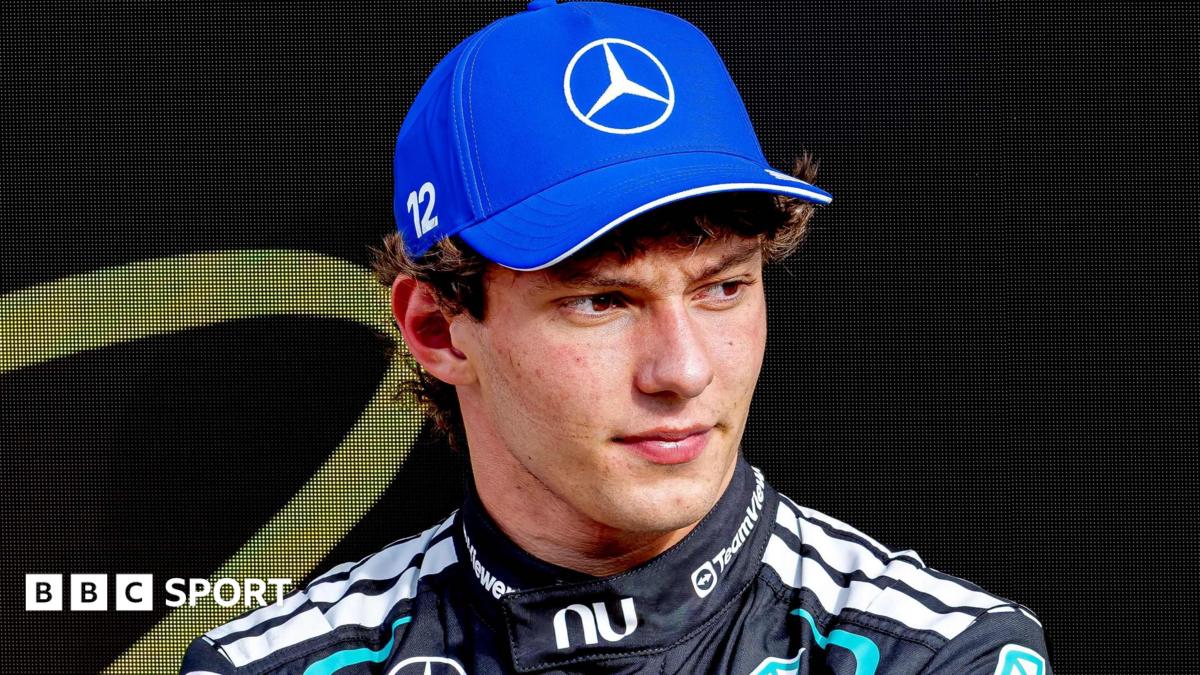
Team principal Toto Wolff reveals budget cap constraints are forcing the Silver Arrows to deploy fewer car developments than rivals, impacting current performance and future prospects.
The Formula 1 landscape is shifting dramatically as the season progresses, with Mercedes’ early-season dominance showing significant signs of erosion. After winning the first six races and securing 10 consecutive poles, the Silver Arrows have seen their competitive edge challenged, prompting questions about their strategic choices.
At the recent Dutch Grand Prix, McLaren’s Lando Norris secured his second consecutive victory, beating championship leader Kimi Antonelli of Mercedes. This result further highlighted Mercedes' recent struggles, as they haven't won a race since Spa-Francorchamps, and only two of the last six overall.
The underlying reason for this change appears to be a notable disparity in car development. Mercedes has introduced significantly fewer upgrades compared to their top competitors, a strategy that has raised concerns about their long-term performance trajectory, according to reporting by BBC Sport - Formula 1.
Mercedes' Shifting Performance in F1
The statistical evidence paints a clear picture of Mercedes' declining lead in F1. Over the entire season so far, the Mercedes car remains the fastest in qualifying, holding an average advantage of 0.316 seconds over Ferrari and an additional 0.041 seconds over McLaren. However, this overall figure masks a dramatic shift in competitiveness.
In the first six races leading up to the Canadian Grand Prix in late May, Mercedes was a formidable force, boasting an average lap time advantage of 0.453 seconds over McLaren (then the next fastest team) and 0.489 seconds over Ferrari. Since Monaco, however, this gap has shrunk considerably, now standing at just 0.163 seconds over Ferrari and 0.270 seconds over McLaren. Notably, Red Bull has also seen their qualifying advantage over the last six races reduce from 0.813 seconds to 0.353 seconds, indicating a general closing of the field.
The Stark Reality of F1 Car Upgrades
A primary driver for Mercedes' reduced advantage is their car upgrade strategy. F1 teams operate under a strict budget cap, set at $215 million (£170 million) for all competitors. Despite this, there has been a significant difference in the number of new parts introduced by teams.
Since the beginning of the season, Mercedes has fitted a total of 24 new components to their cars. This figure stands in stark contrast to their rivals: Red Bull has deployed 37 new parts, McLaren 38, and Ferrari a staggering 40. Even smaller budget teams like Aston Martin, Alpine, Racing Bulls, Audi, Cadillac, and Haas have introduced more upgrades than Mercedes, who share the lowest number of new parts with Williams.
Toto Wolff on Mercedes' Financial Strategy
Mercedes team principal Toto Wolff addressed the issue directly, stating, "We haven't got the money to put developments on the car." He explained that the team is "trying to evenly split that through the season, based on our calculations of when we can bring the biggest updates and optimising the championship points."
Wolff also speculated on the differing approaches of competitors. When asked why McLaren and Ferrari seemed to have more financial flexibility for upgrades, he commented, "Well, you will see how towards the end of the season (whether) they are going to be able to deploy as much stuff on to the car as they do now." He suggested, "Someone might have a different strategy in spending more at the beginning and in the middle of the year than towards the end." This implies Mercedes might have spent more in the initial design and build of this year's car or are conserving funds for a significant late-season upgrade, or even prioritizing development for next year's car. The team faces further challenges with Kimi Antonelli receiving a grid penalty in Italy for exceeding engine part limits, and George Russell likely to incur a similar penalty in Azerbaijan.
Aston Martin's Engine and Chassis Improvements
While Mercedes grapples with its spending strategy, other teams are pushing hard with upgrades. Aston Martin, for example, introduced a Honda 'spec two' engine at the Dutch Grand Prix, alongside a new front wing and diffuser for their car that debuted in Hungary. The team anticipated a reduction of 0.3-0.5 seconds in lap times with the new Honda engine.
The immediate results were mixed. Fernando Alonso showed periods of strong competitiveness but qualified further from pole than in Hungary. Despite a messy final qualifying lap, Alonso drove an exceptional race on a one-stop strategy, securing ninth place and holding off faster cars. He earned two points for Aston Martin, which he described as "well deserved," differentiating them from a previous single point scored with numerous retirements.
Alonso acknowledged improvements: "Another step forward, especially on the chassis side. We brought four or five components here." He also highlighted a challenging race strategy: "We are in traffic... We are faster in the corners than the people in front of us and we are slower on the straights. We're stuck behind. So as soon as we have free track in front of us, we try to use it. Even if it's not the optimal performance and the optimal strategy, and it's what we did today."
Frequently Asked Questions
Why is Mercedes' F1 dominance declining?
Mercedes' Formula 1 dominance is declining due to a significant reduction in car upgrades compared to rivals. They have introduced only 24 new parts this season, far fewer than Red Bull, McLaren, and Ferrari, which has led to a shrinking performance advantage on track.
How many upgrades have Mercedes brought to their F1 car?
Mercedes has brought a total of 24 new parts to their Formula 1 cars since the start of the season. This is the equal lowest number of upgrades on the grid, matching Williams, and is considerably less than competitors like Ferrari (40), McLaren (38), and Red Bull (37).
What did Toto Wolff say about Mercedes' spending?
Mercedes team principal Toto Wolff stated, "We haven't got the money to put developments on the car," attributing this to the budget cap. He suggested the team is distributing development funds evenly throughout the season and speculated that rivals might have a different spending strategy, front-loading their upgrades.
What were the results of Aston Martin's upgrades?
Aston Martin introduced a Honda 'spec two' engine, new front wing, and diffuser at the Dutch Grand Prix. While qualifying was challenging, Fernando Alonso secured ninth place and two points in the race through an outstanding one-stop strategy, confirming "another step forward, especially on the chassis side."