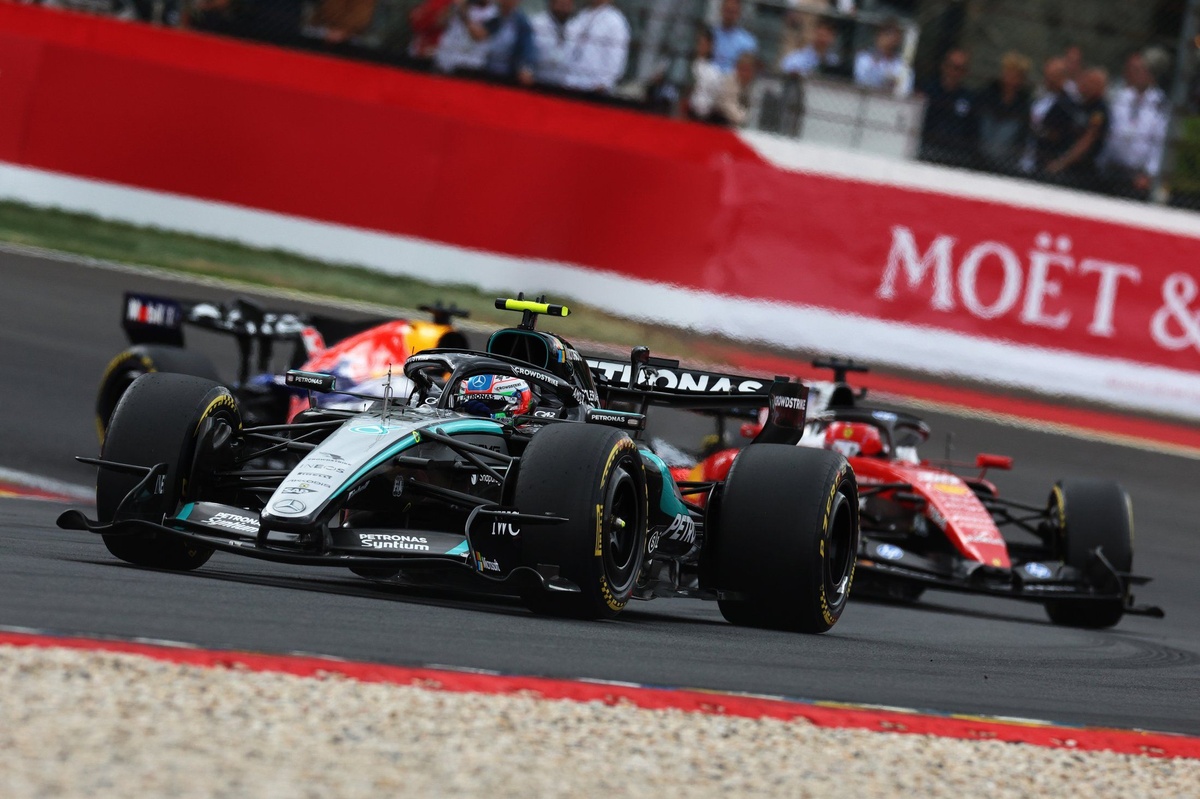
Mercedes Technical Director James Allison details how a unique focus on future regulations created a 'leapfrog effect' with significant in-season performance gains.
Mercedes Formula 1 Technical Director James Allison has offered a unique insight into the team's current development trajectory, explaining that their intense focus on the 2026 F1 car has intentionally placed them 'out of phase' compared to rival teams. This unconventional strategy is now yielding considerable benefits on track.
Allison clarified that the decision to prioritize the development of the future 2026 challenger for an extended period means Mercedes is now observing a distinctive pattern in its performance. While other teams might have spread their resources more evenly, Mercedes dedicated its engineering efforts to the upcoming regulatory changes.
The result of this strategic timing is a noticeable 'leapfrog effect,' where the team's in-season updates are producing substantial performance gains on their current car, as reported by Autosport - F1.
The 'Out of Phase' Development Strategy Explained
The term 'out of phase,' as described by James Allison, refers to Mercedes' atypical development timeline for its Formula 1 machinery. Instead of a linear progression, the team consciously chose to dedicate a significant portion of its design and engineering capacity to the 2026 F1 car much later than some competitors.
This distinct approach suggests a deferred gratification strategy. By pushing the envelope on future regulations, Mercedes accepted that their immediate competitive position might be influenced. However, the long-term goal is to maximize understanding and innovation for the radical rule changes arriving in 2026.
Unlocking Significant In-Season Gains
The consequence of this 'out of phase' strategy is now manifesting in rapid progress for Mercedes' current F1 car. Allison indicates that the delayed shift of focus from the 2026 project back to the present machine is leading to the 'leapfrog effect', where the team is making larger performance strides with its in-season updates.
This suggests that as resources cycle back from future car development, the insights gained, combined with a concentrated effort, are enabling more impactful upgrades. The team is reportedly seeing large performance gains that allow them to jump ahead of rivals, rather than just incrementally improving.
Mercedes' Future-Focused Engineering Approach
Mercedes' method underlines a bold engineering philosophy that balances immediate competitiveness with long-term strategic advantage. While many teams constantly juggle current and future car development, Allison's remarks highlight a more distinct allocation of resources.
This approach could provide Mercedes with a robust foundation for the highly anticipated 2026 season, which will introduce significant changes to engine architecture and chassis regulations. For now, fans can expect to see the fruits of this unique strategy in the form of accelerated performance enhancements throughout the current racing calendar.
Frequently Asked Questions
Who is James Allison?
James Allison is the Technical Director for the Mercedes-AMG Petronas Formula 1 Team. He plays a crucial role in overseeing the design, development, and engineering of Mercedes' F1 cars.
What does 'out of phase' mean for Mercedes F1's development?
'Out of phase' means Mercedes made a strategic decision to dedicate more time to developing their 2026 Formula 1 car later than other teams. This has created a unique development timeline compared to their competitors.
How is Mercedes F1 achieving a 'leapfrog effect' with its car?
The 'leapfrog effect' occurs because Mercedes' late focus on the 2026 car meant a concentrated effort when resources shifted back to the current car. This strategy is now leading to large performance gains from their in-season updates, allowing them to advance significantly against rivals.