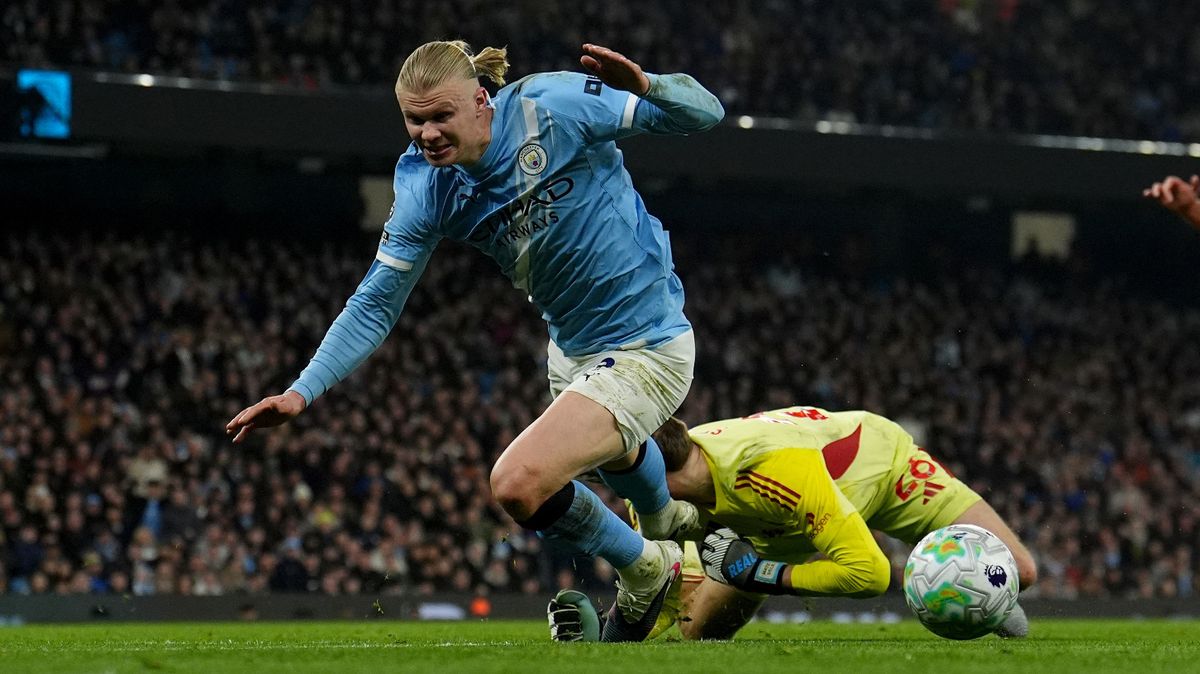
Graham Scott, who recently retired from top-flight officiating, explained the difficult position referees face when players stay on their feet after a foul.
A former Premier League official has candidly admitted that footballers are often more likely to be awarded a penalty if they hit the ground, rather than attempting to stay on their feet after being fouled. This revelation addresses a long-standing frustration among players and fans who feel that a commitment to fair play can sometimes go unrewarded in the penalty box.
Graham Scott, who concluded his career as a top-level referee at the end of the 2024/25 season, shared his insights on the "Under The Cosh" podcast. His comments shed light on the difficult decisions officials must make in fast-paced game situations, where player reactions significantly influence calls.
The veteran referee's admission highlights a thorny issue in football, where simulating a foul, often labeled as diving, can paradoxically lead to a favorable outcome for the attacking team, according to reporting by Mirror - Football.
Why Players Are More Likely to Get a Penalty if They Go Down
Speaking about the complex nature of penalty decisions, Graham Scott directly acknowledged the prevailing trend. "There are some situations where if the player doesn't go down, they're not going to get a pen, it's as simple as that," he stated. This straightforward observation resonates with many who watch the game.
Scott elaborated on this point by referencing a specific incident involving Sunderland's Brian Brobbey, who notably did not receive a penalty despite an apparent foul because he tried to remain upright. The former referee described Brobbey as a "very strong player" who could be challenging to officiate due to mutual holding between him and opponents.
The phenomenon of "mutual holding," where both players engage in grappling, often complicates a referee's judgment. Scott explained that while assistants might flag holding, a referee sometimes dismisses it, perceiving shared responsibility. He conceded that this can be a "cop-out for not dealing with an actual foul," further emphasizing that if a player stays on their feet, a penalty is "much less likely to be given."
Scott also touched on the perception from the defending side, noting, "If a referee gives a penalty against you and the player isn't even on the deck. It's like, 'Really, for that?' It works both ways." This suggests that penalties awarded for fouls where the player doesn't fall are often met with greater disbelief and resistance, making officials hesitant to make such calls.
Premier League Grappling Rules Tighten Up
In related developments, several rule adjustments have been implemented ahead of the new Premier League season, particularly focusing on physical play. Referees' chief Howard Webb confirmed that a stricter stance will be taken on grappling and holding during set-pieces, aiming to reduce instances of defenders pulling attackers to the ground unchecked.
Webb stressed that while physicality remains a vital component of English football, last season saw too many unpunished instances of defenders unfairly hindering attackers. He is keen for both on-field referees and VAR officials to be more vigilant in identifying and penalizing these actions.
Fans can anticipate a noticeable shift in how these fouls are managed. Webb indicated that referees will issue "less warnings" than previously, a change that directly addresses a common source of frustration among supporters. This proactive approach aims to ensure more consistent application of the rules throughout the entire season, not just at the beginning.
Referees to Penalize More Clear Foul Actions
Despite the push for increased vigilance, Webb clarified that the Premier League will still maintain a "high threshold" for what constitutes a foul. This means not every minor contact will result in a whistle, preserving the flow and physicality that fans expect from the league. However, he fully expects that at the end of the upcoming season, there will be a clear reflection of "more offences" having been penalized.
The focus will be on distinguishing between subtle, incidental actions that are part of the game and those "clear actions that are clearly unfair." This targeted enforcement aims to create a fairer playing environment without sterilizing the sport's competitive edge. The changes are designed to encourage players to compete fairly, knowing that deliberate infringements will be more readily punished.
Frequently Asked Questions
Who is Graham Scott in the context of Premier League officiating?
Graham Scott is a former top-level Premier League referee who retired at the end of the 2024/25 season. He is known for providing insights into the challenges and decision-making processes faced by officials in professional football.
What is the main issue Graham Scott addressed regarding penalty decisions?
Graham Scott controversially admitted that players are often more likely to be awarded a penalty if they go down to the ground after a foul, rather than trying to stay on their feet. He highlighted the perception among referees and fans that staying upright makes a foul less likely to be penalized.
What changes are expected regarding holding and grappling in the Premier League?
Referees' chief Howard Webb announced that a harder line will be taken on grappling and holding at set-pieces in the Premier League. Fans can expect fewer warnings and more offenses to be penalized throughout the season, as officials aim to reduce unpunished instances of defenders dragging attackers.
What was the Brian Brobbey incident Graham Scott mentioned?
Graham Scott referenced an incident where Sunderland's Brian Brobbey did not receive an obvious penalty despite being fouled because he remained on his feet. Scott used this example to illustrate his point that players are often disadvantaged when they don't go to ground in the event of a foul.