Mirror Football's John Cross highlights key changes the Premier League should consider after the World Cup's experimental approach.
The 2026 World Cup served as a vast testing ground for the future of football, introducing numerous rule changes, entertainment concepts, and broadcast innovations. With 48 teams competing across three time zones, FIFA used the global tournament to trial various modifications.
Some of these experiments were overwhelmingly successful, significantly enhancing the fan experience. However, other elements were criticized for being overly commercialized, artificial, and disconnected from the core spirit of the beautiful game.
As the domestic season approaches, Mirror Football chief writer John Cross has meticulously analyzed the World Cup's trials. He offers a clear perspective on what the Premier League should immediately discard and what it should embrace, according to reporting by Mirror - Football.
Four World Cup Experiments the Premier League Must Ditch
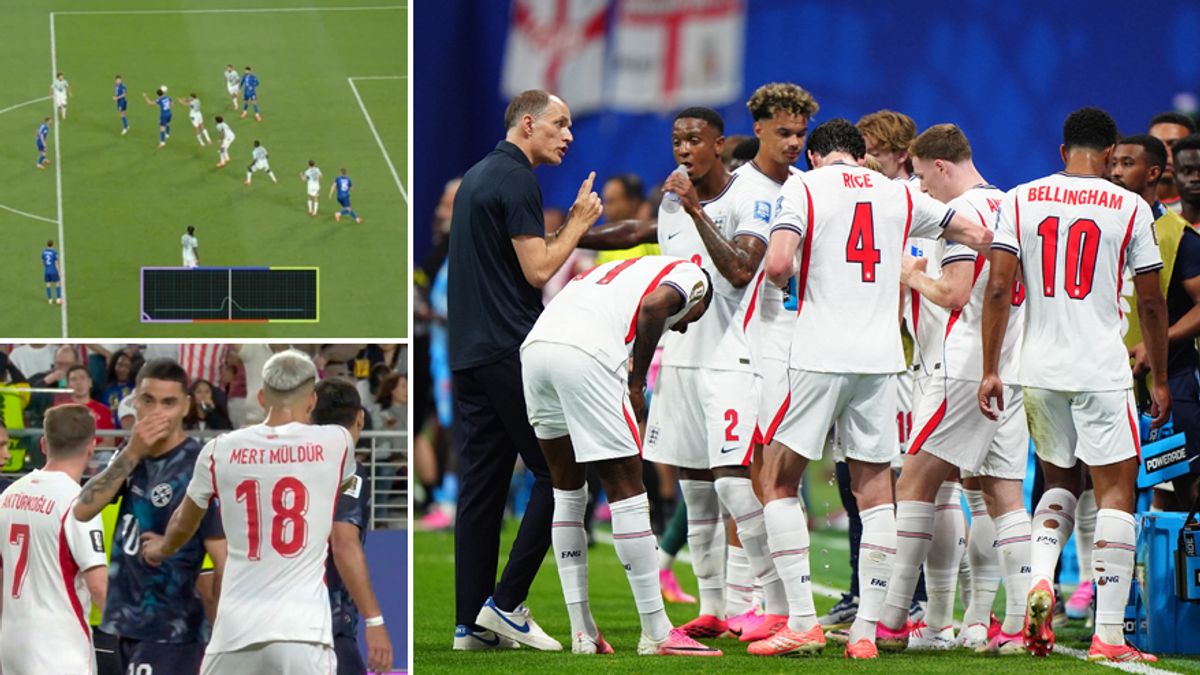
What began as a genuine medical necessity in extreme climates eventually mutated into an unwelcome tactical timeout. John Cross is unequivocal: hydration breaks have no place in a sport that relies on continuous momentum. "Ditch them," Cross stated on the Make Football Great Again podcast, "They're just not for me." The idea of enforcing these breaks during a freezing January night match in England is frankly laughable.
The attempt to inject elaborate American-style stadium entertainment into the intermission of the world's biggest match fell flat for many traditionalists. Football is rooted in raw passion, not choreographed corporate pop music. Cross was thoroughly unimpressed by the plastic spectacle. "Ditch it," he insisted. "Those bizarre choreographed shows didn't really work for me, so generally ditch." Most fans use halftime to discuss tactics, complain, or queue for a pie.
The expansion of the tournament to 48 teams led to a group stage that felt less like an elite global showcase and more like an endless, low-stakes warm-up. Practically every team qualified for the knockout rounds, diluting the early drama. "I hate the group stage and the lack of jeopardy," Cross explained. "It's embarrassing and it's just silly and it's just not what we want. You've got to go back to kind of 32 or the whole hog can go 64."
Technology is meant to eliminate controversy, but the microchip sensors embedded inside the tournament match balls, dubbed 'Snicko' technology, only succeeded in muddying the waters. Fans and pundits were left entirely unconvinced by the digital readouts. "Well, I didn't like it," Cross admitted, recalling the highly contentious decision to rule out Croatia's goal against Portugal. "Because basically, you cannot tell me that it helped... No chance. Absolutely no chance." When technology contradicts the human eye, it creates confusion.
Three World Cup Innovations the Premier League Must Adopt
Television coverage took a significant leap forward this summer with data overlays that genuinely added context to the unfolding match. These momentum graphics tracked the shifting tides of dominance in real-time. "I loved [the momentum graphics]. Absolutely loved them," Cross enthused. "Keep, love that. I think it was a genuine, interesting stat that did generate, and it was fascinating." In a league as frantic as the Premier League, this visual representation of sustained pressure would be an incredible addition for viewers.
VAR protocol remains a constant source of frustration in England, but the World Cup demonstrated that safety-net rules can be introduced effectively to prevent catastrophic officiating blunders without slowing the game down. The introduction of the Mistaken Identity rule, for example, streamlines video review processes. "Yeah, I liked it," said Cross. "And I think that, yeah, there were a few bits and pieces that I quite liked on the VAR thing. I think that I was positive about various bits and pieces that they've done. So I think generally, yes, keep."
The modern habit of players shielding their lips with their hands whenever they speak to an official or an opponent has long driven fans crazy. The tournament's attempt to clamp down on this insincere behavior was a breath of fresh air. "I'd like to keep that rule that you can't, but you have to do it across the board," Cross argued, insisting that domestic football must enforce it strictly. "Look, we'd have a couple of early scares, but then basically, they'd soon learn. We all know why it was brought in. It was brought in for the very best and most important reasons... The players will quickly learn."
Frequently Asked Questions
Why did FIFA experiment so much at the 2026 World Cup?
The 2026 World Cup, featuring 48 teams across multiple time zones, served as a large-scale laboratory for FIFA to test new rules, hyper-commercialized entertainment concepts, and advanced broadcast technologies to evolve the global game.
What was criticized about the 48-team World Cup group stage?
Critics, including Mirror Football's John Cross, argued that the expanded 48-team group stage format led to a significant lack of jeopardy. Too many teams qualified for the knockout rounds, making the initial matches feel like low-stakes warm-ups rather than an elite competition.
How could momentum graphics benefit Premier League broadcasts?
Momentum graphics, which provide real-time data overlays tracking a team's dominance and sustained pressure, would be a valuable addition to Premier League broadcasts. They offer viewers an immediate visual understanding of the game's flow, enhancing traditional punditry and engagement, as highlighted by journalist John Cross.
What is the "mistaken identity rule" in VAR?
The "mistaken identity rule" in VAR protocols allows for intervention when an official incorrectly identifies a player for a booking or sending off. This common-sense approach, praised by John Cross, helps prevent catastrophic officiating blunders without significantly disrupting the game's flow.
Why does John Cross want a ban on covering mouths in football?
John Cross advocates for a strict ban on players covering their mouths when speaking to officials or opponents. He views this as an insincere behavior that the Premier League should eradicate, believing players would quickly adapt to the rule if consistently enforced for the integrity of the game.