From scouting rivals to writing emails and understanding personalities, players grapple with AI's benefits and drawbacks on and off the court.
The world of professional tennis is experiencing a significant shift as generative artificial intelligence (GenAI) emerges as a new tool for top players. This technological evolution isn't just changing how athletes prepare for matches; it's also influencing their daily routines and personal insights. Stars are now exploring everything from advanced opponent analysis to mundane tasks and even philosophical self-reflection through AI platforms.
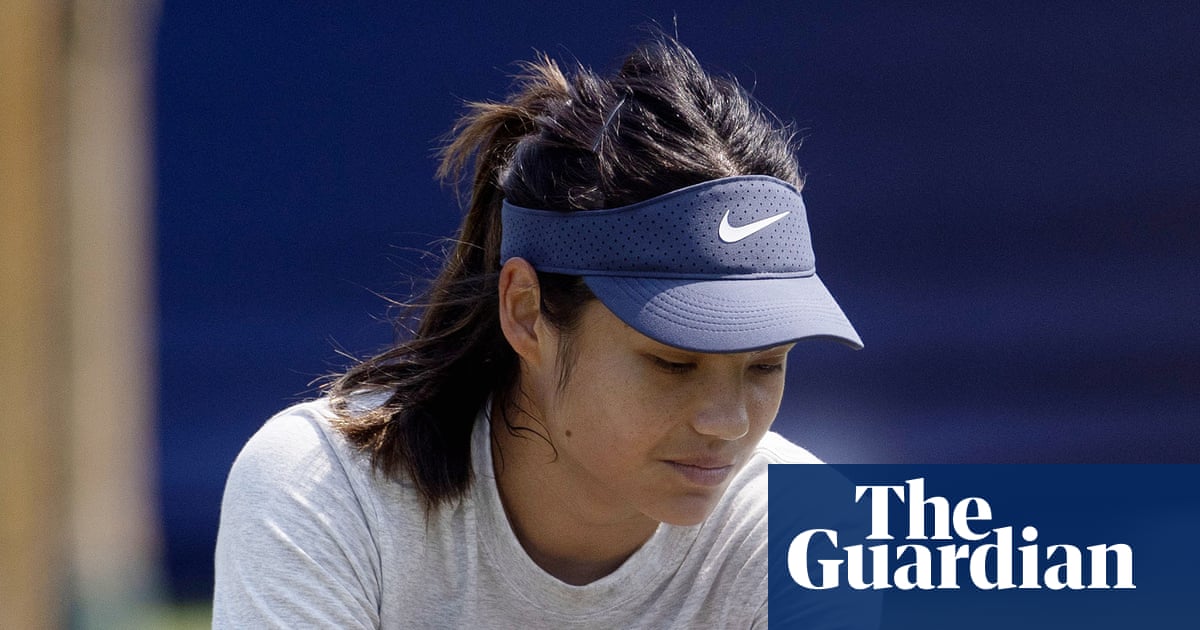
Emma Raducanu, the former US Open champion, humorously shared a deeply personal interaction with AI. Curious about what her extensive use of ChatGPT revealed, she asked the platform to create a “Chat Wrapped” summary of her personality. Raducanu found the AI's analysis “a little bit too accurate,” describing it as “very clear, very concise. No nonsense, straight into the question.” She admitted, “OK, I can relate maybe. Some of that is true.”
While Raducanu uses AI for introspection, others are leveraging it for competitive edge. Some players are quietly incorporating AI tools to scout future opponents, while others navigate its integration into their personal lives with a mix of enthusiasm, skepticism, and outright caution, according to reporting by The Guardian - Tennis.
AI on the Court: Scouting Opponents
Generative AI is increasingly making its way into pre-match preparations. Jessica Pegula recently discovered that a fellow tour player, whom she chose not to name, is using ChatGPT and similar tools to analyze the playing styles of upcoming rivals. Pegula noted that while players might “cross-reference to see how accurate it is,” the technology “summarises everything and you can make it maybe very simplified or make it complicated,” suggesting its practical use in generating opponent scouting reports.
Bianca Andreescu, the 2019 US Open winner, successfully deployed ChatGPT before facing an unfamiliar opponent on the lower-level ITF circuit. With limited video footage available, she prompted the AI, “Please be specific. Please do your research.” Andreescu believes “it worked out well,” indicating AI's potential to bridge information gaps against lesser-known adversaries. Furthermore, the ATP has developed Tennis IQ, a platform that processes vast amounts of in-match data to assess player performance and shot quality, showcasing the sport's move towards data-driven strategies.
However, not all players are convinced. Zizou Bergs, Belgium's top-ranked male player, immediately dismissed AI scouting as “completely trash” after seeing a result from two or three years ago. Daniil Medvedev, alongside friends and his team, jokingly used ChatGPT to tackle men's tennis's toughest challenge: how to beat Jannik Sinner and Carlos Alcaraz. Medvedev described AI as an “armchair coach,” offering insights but lacking actionable steps on court. Even Coco Gauff found AI unhelpful when she asked for strategy against herself, playfully rolling her eyes as she noted, “It didn’t say anything I didn’t already know.”
Beyond the Baseline: AI in Daily Life
The influence of AI extends beyond tennis strategy, infiltrating the daily lives of many athletes. Emma Raducanu exemplifies this, using ChatGPT for an eclectic array of inquiries. She explained that her questions are “as random as my brain,” ranging from history and art to obscure facts and translations. This varied usage highlights AI's role as a versatile personal assistant, helping players manage diverse information needs.
Iga Swiatek, the world No. 1, shared a more practical application, grinning as she admitted, “He’s writing emails for me sometimes.” Elina Svitolina, meanwhile, found humor in asking ChatGPT about personal style and color palettes, prompting it with “What colours are suiting me the most.” The AI's response of “pastel colours. Cold summer” shows players using the tool for lighthearted personal advice, demonstrating its wide-ranging utility in their busy lives.
The Skeptics and Concerns Regarding AI Use
Despite its growing presence, generative AI faces significant skepticism from many professional tennis players. Frances Tiafoe openly rejects the technology, stating, “I don’t have ChatGPT. I don’t have the other one. I haven’t used much AI-generated stuff. I’m going against the grain. I’m still Google searching.” His stance reflects a cautious approach, preferring traditional methods over AI's rapid information processing.
Jelena Ostapenko, the 2017 French Open champion, recounted a cautionary tale about someone who relied on ChatGPT for visa information and got stuck at an airport. This experience has colored her perspective, leading her to believe that while she uses it when “too lazy” to search herself, it risks “making us lazy.” She emphasized the need to “check stuff yourself,” highlighting a concern about over-reliance and the potential for misinformation. Daniil Medvedev echoes this sentiment, generally disliking AI because it encourages people to “just stay on the sofa and make their life through AI,” diminishing personal effort.
Beyond practicality and laziness, environmental concerns also deter some players from embracing AI fully. Naomi Osaka voiced her hesitation, stating, “I just heard it takes up a lot of water, and I like the water we have on Earth.” Coco Gauff concurred, acknowledging AI's coolness but disapproving of its environmental impact. Gauff stated, “I don’t think I’m going to waste my clicks on that,” reserving AI use only for emergencies, like when she needed information for a friend going to the hospital. These environmental considerations represent a growing ethical dilemma for athletes considering AI adoption.
Navigating the Future of AI in Tennis
The future of AI in professional tennis remains an area of active exploration and considerable uncertainty. Bianca Andreescu, despite her successful on-court use, actively tries “not to become too obsessed with it because it can control our life.” She notes the AI's engaging nature, asking questions and seeming interested, but recognizes the need for balance to avoid excessive dependence on a tool that “won’t talk back.”
Frances Tiafoe, known for his laid-back demeanor, adopts an “old soul” perspective on AI, expressing profound discomfort with its rapid advancement. Shaking his head theatrically, he questioned, “I’m struggling: this can’t be reality.” He struggles with the sheer volume of information AI can provide, admitting, “At one point I will [embrace AI] but I don’t like so much information. It’s just crazy.” This reflects a broader locker room uncertainty about how deeply AI will integrate into the sport and players' lives, leaving many to ponder its ultimate impact.
Frequently Asked Questions
How do tennis players use AI for scouting opponents?
Some tennis players are utilizing generative AI tools like ChatGPT to create opponent scouting reports, summarizing playing styles and strategies. Bianca Andreescu successfully used it to research an unfamiliar opponent, while the ATP's Tennis IQ platform offers advanced data analysis for player performance and shot quality.
Which tennis players use AI for personal tasks?
Emma Raducanu employs ChatGPT for a wide variety of personal queries, including personality insights, history, art, and translations. Iga Swiatek uses AI to draft emails, and Elina Svitolina consults it for personal style advice like suitable clothing colors.
What are some concerns tennis players have about AI?
Concerns among players include the accuracy and reliability of information, as highlighted by Jelena Ostapenko's visa story. Many, like Daniil Medvedev and Ostapenko, worry that AI promotes laziness and over-reliance, potentially diminishing personal effort. Naomi Osaka and Coco Gauff have also raised environmental concerns about AI's substantial water consumption.
Is AI widely accepted among professional tennis players?
No, there is mixed acceptance of AI among professional tennis players. While some, like Emma Raducanu and Bianca Andreescu, actively use it for both on-court and personal tasks, others, such as Frances Tiafoe, Zizou Bergs, and Daniil Medvedev, express strong skepticism, dismissiveness, or ethical concerns about its impact.