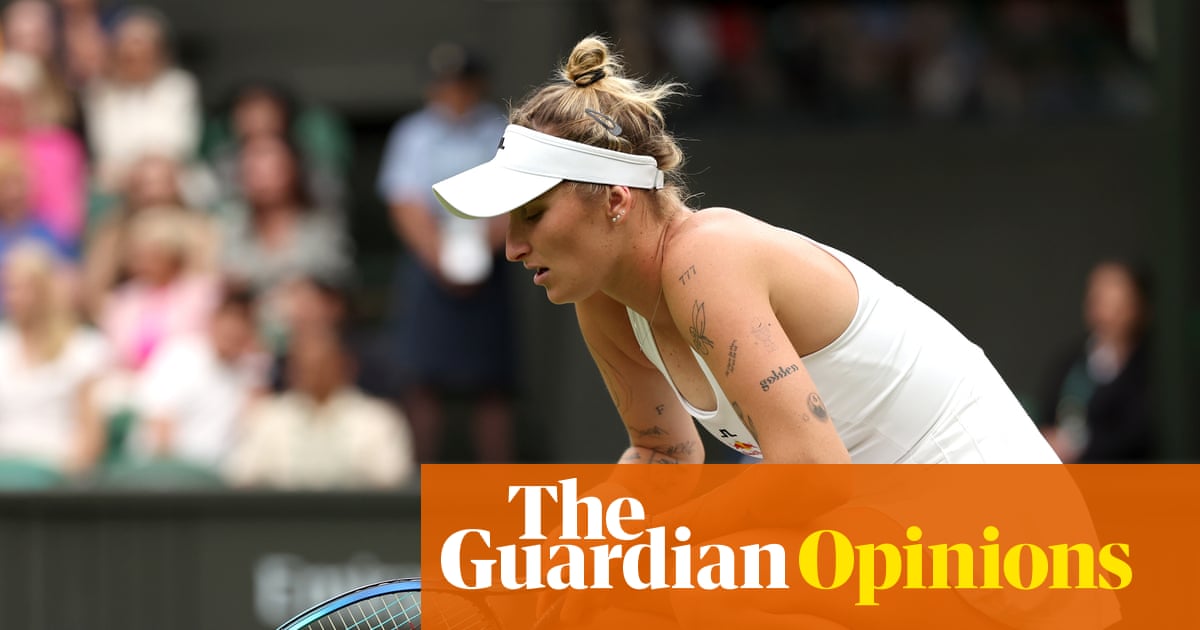
Marketa Vondrousova's four-year doping suspension exposes tennis's strict transparency, starkly contrasting with Chelsea star Mykhailo Mudryk's quietly resolved return.
Former Wimbledon champion Marketa Vondrousova has received a four-year ban for refusing an anti-doping test, a decision that has thrust tennis's rigorous anti-doping procedures into the spotlight. The International Tennis Integrity Agency (ITIA) announced her suspension on June 22, revealing a series of questionable decisions by the player leading to what could be a career-ending penalty.
The suspension follows an incident last December where Vondrousova, 27, declined a test at her flat. This occurred outside the designated one-hour window that athletes provide to anti-doping authorities as part of the whereabouts program. Her subsequent attempts to control the narrative through social media and interviews were later undermined by a detailed 58-page tribunal document.
This lengthy, public disclosure of Vondrousova's case presents a stark contrast to how doping matters are handled in other high-profile sports, particularly football. The same day Vondrousova’s full decision was made public, Chelsea winger Mykhailo Mudryk's doping suspension was quietly shortened, allowing him to return to play with minimal details released, according to reporting by The Guardian - Tennis.
Vondrousova's Ill-Advised Refusal and Mental Health Defense
The extensive tribunal document paints a clear picture of Marketa Vondrousova's refusal. It suggests she was largely ignorant of fundamental anti-doping regulations and acted arrogantly, irritated by the anti-doping officer's 8 PM visit outside her designated slot. A revealing text to her boyfriend, stating, “So like here is ringing some c*** from the doping,” indicated disdain rather than fear.
Despite being warned of severe consequences, Vondrousova signed a document refusing the test. This action is now considered one of the most self-sabotaging decisions by a tennis player in history. Her belief that testers should only arrive during her designated slot, a misunderstanding shared by her agent, proved critical.
Vondrousova attempted to use her mental health as a defense, arguing that generalized anxiety disorder and acute stress reaction impaired her judgment. However, the tribunal found this evidence insufficient. Two of her expert witnesses did not attend cross-examination, and one confirmed he had not actually diagnosed her. The panel concluded that her excuse did not meet the high threshold required to justify refusing a test.
The World Anti-Doping Agency (WADA) Code and Player Responsibility
The World Anti-Doping Agency (WADA) code is famously stringent, creating a stressful environment for athletes. While many are critical of specific aspects of the system, understanding and complying with these rules remains a core responsibility of every professional athlete. Vondrousova's suspension until she is 31 years old represents a potentially career-ending blow for one of her generation's most talented tennis players.
Her invocation of Petra Kvitova’s horrific stabbing incident on social media, in an attempt to explain her fearfulness, was seen as distasteful by some. Especially given she felt safe enough to leave her apartment building to walk her dog while the anti-doping officer remained at her door.
Football's Confidential Doping Cases: The Mykhailo Mudryk Example
In stark contrast to Vondrousova’s transparent, detailed case, football's handling of doping violations often remains shrouded in secrecy. Mykhailo Mudryk, the Ukrainian winger for Chelsea, was initially handed a four-year ban after testing positive for meldonium. However, this suspension was significantly shortened, allowing his swift return to competition.
Unlike the 58-page document detailing Vondrousova’s transgressions, the Football Association (FA) provided minimal information on Mudryk’s case. They never even publicly announced his initial four-year ban; this detail surfaced only when Mudryk appealed to the Court of Arbitration for Sport (CAS). The FA, in collaboration with WADA, later announced a resolution agreement, reducing his suspension.
The Lack of Transparency in Football Anti-Doping
The FA's press release concerning Mudryk cited a low concentration of meldonium, which would not be reported under WADA’s new technical document coming into force in January, and unspecified “other circumstances.” This lack of detail is typical for football, a sport where confidentiality rules often overshadow transparency in anti-doping matters.
This secrecy extends beyond Mudryk's situation, with similar murkiness surrounding cases like Paul Pogba's doping ban in 2024. While other sports like cycling, athletics, and tennis have been compelled to become more transparent due to reputation damage from high-profile doping scandals, football’s enduring popularity and relatively few major public doping cases mean there is less pressure on its governing bodies to reveal more.
Frequently Asked Questions
What was Marketa Vondrousova's doping test violation?
Marketa Vondrousova received a four-year ban for refusing to take an anti-doping test when an officer approached her at her flat last December, outside her designated whereabouts slot.
Why was Mykhailo Mudryk's doping ban shortened?
Mykhailo Mudryk's initial four-year ban was reduced following a case resolution agreement between the Football Association (FA) and WADA. Reasons cited included a low concentration of meldonium and unspecified "other circumstances of the case."
What is the "whereabouts program" in anti-doping?
The whereabouts program requires athletes to provide anti-doping authorities with their location information and a specific one-hour slot each day where they will be available for testing, even if they are not actively competing.
How do tennis and football differ in handling doping cases?
Tennis, like many Olympic sports, typically releases detailed, public documents (such as Vondrousova's 58-page tribunal decision) explaining doping violations. Football, conversely, often operates with significant confidentiality, providing minimal public information on doping cases due to the FA's rules.
What are the consequences for Marketa Vondrousova?
Marketa Vondrousova is suspended from professional tennis for four years, making her eligible to return only when she is 31 years old, a ban that could potentially end her career as a top athlete."