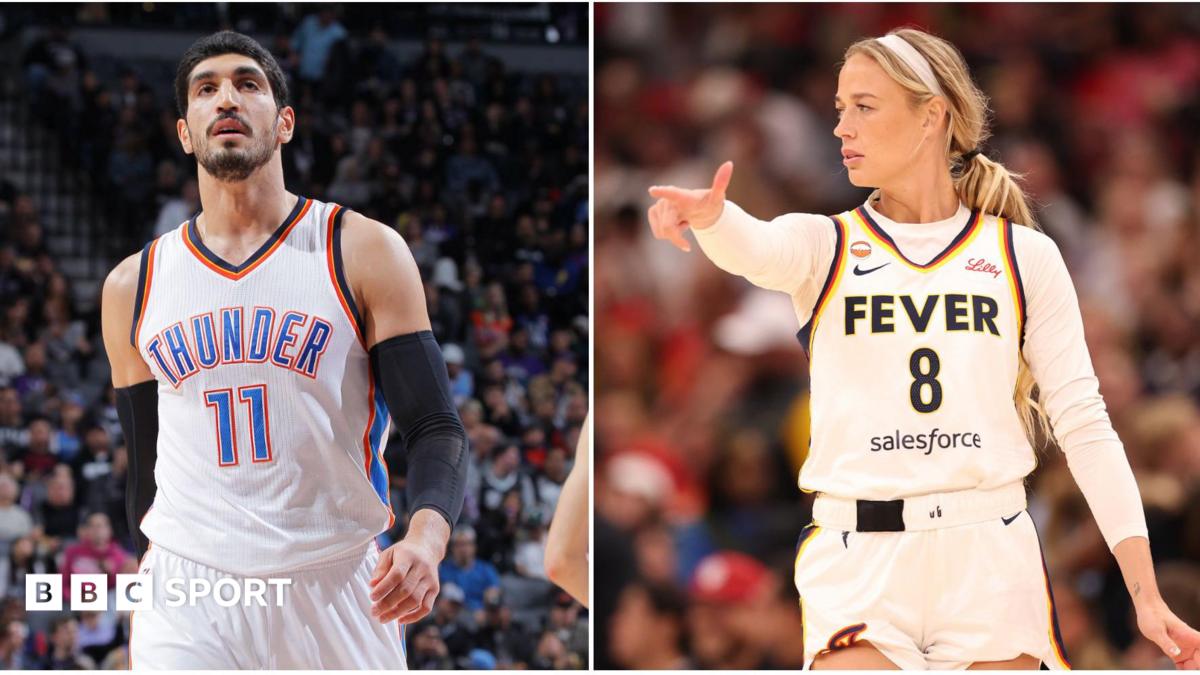
Indiana Fever's Sophie Cunningham sparked a national debate, prompting former NBA players to declare for the draft and putting the WNBA's "women only" eligibility rules under intense scrutiny.
While the 2026 WNBA season is still underway, attention has unexpectedly shifted to next year's draft for North America's premier women's basketball league. The reason? Several former men's NBA players have publicly stated their intention to enter the draft, leveraging the perceived lack of specific eligibility guidelines for transgender women athletes.
This surprising development is the latest escalation in a growing controversy initially sparked by Indiana Fever player Sophie Cunningham. Her outspoken comments about "protecting young girls" from competing against "biological men" in sports ignited widespread discussion and even small-scale protests on both sides of the issue.
The debate surrounding transgender women in sports has been thrust back into the national spotlight, prompting significant reactions from players, coaches, and politicians alike, according to reporting by BBC Sport - Top Stories.
Sophie Cunningham's Stance Ignites WNBA Transgender Policy Discussion
The current heated discussion gained traction last month after Sophie Cunningham, a high-profile Indiana Fever guard, addressed the topic of safeguarding women's sports during an interview. Cunningham clarified that she denied accusations of hating transgender people, emphasizing her desire to "extend love" to everyone.
However, she also asserted, "I also think with that love is truth, being honest. And I want to protect young girls in a locker room, or young girls in sport who shouldn't have to go against biological men." She later reinforced her position, calling it "common sense" to exclude transgender athletes from women's competitions.
Her remarks quickly transcended basketball, becoming a wider political issue in the United States. President Donald Trump publicly supported Cunningham, while Vice-President JD Vance praised her as "inspiring." Despite the 29-year-old later stating she is "not a very political person," her comments have led to competing rallies and protests at Indiana's games across the country. The scale of this debate is particularly notable as no openly transgender woman is scheduled to play, or has ever played, in the WNBA.
Former NBA Players Challenge WNBA Eligibility Rules
The WNBA operates under a collective bargaining agreement (CBA) which dictates various aspects of league operations, including player eligibility. This agreement explicitly states: "Only players who are women are eligible to play in the WNBA." However, the specific definition of "women" in this context remains largely undefined.
This lack of detailed criteria has been spotlighted by former NBA player Enes Kanter Freedom, who concluded his career with the Boston Celtics in 2022. He declared himself a WNBA prospect, stating, "If simply declaring who you are is all that's required, then I meet every single requirement necessary to compete in the WNBA." Kanter Freedom, known for his activism, clarified his intent: "I'm simply asking that the current rules be applied equally to everyone."
A day after Kanter Freedom's announcement, Royce White, an ex-NBA player with three career appearances and now a Republican Senate candidate, also declared for the WNBA Draft. White claimed, "I identify as sometimes identifying as a woman for purpose of basketball." The WNBA has not publicly commented on the controversy since Cunningham's initial statements, though Commissioner Cathy Engelbert reportedly informed teams that the matter would be discussed at an upcoming meeting, emphasizing the league's commitment to thoughtful, respectful, and fair competition.
WNBA Players and Coaches React to Transgender Athlete Debate
The controversy surrounding transgender inclusion has become a significant flashpoint within the WNBA, a league historically recognized for player activism on issues such as racial justice, gender equality, and LGBTQ+ rights. The WNBA Players Association (WNBPA) addressed the debate without naming Cunningham, condemning "hate abuse and demonisation of the transgender community" and reaffirming its dedication to "justice, equity, diversity and inclusion."
The WNBPA called for fans to report abusive behavior at games and stressed that while it would engage in "hard" conversations, it "will not be used as political pawns." Strong opinions have emerged on both sides, including from Minnesota Lynx head coach Cheryl Reeve, who stated, "I come from a space of inclusion. The narrative that I think is problematic is to suggest that transgender athletes are the biggest problem in women's sports." Reeve notably wore a "Trans Kids Belong" T-shirt before a game against Indiana, later having a respectful exchange with Cunningham.
Golden State Valkyries forward Gabby Williams expressed an open stance, saying she would welcome a transgender athlete "on my team or against my team, any time." In another incident, Seattle Storm co-owner Celeste Keaton was suspended for five home games after confronting two teenage fans who displayed signs supporting Cunningham. As for Cunningham herself, the intense attention has become an unwelcome distraction, with the player expressing a desire for the focus to return to basketball, arguing that the standard of play in the WNBA is being overshadowed by off-court issues.
Frequently Asked Questions
Who is Sophie Cunningham and what did she say about transgender athletes in the WNBA?
Sophie Cunningham is a high-profile guard for the Indiana Fever. She sparked the current WNBA transgender debate by stating her desire to "protect young girls" from competing against "biological men" in sports, a comment she later defended as "common sense."
Why are former NBA players declaring for the WNBA Draft?
Former NBA players, including Enes Kanter Freedom and Royce White, are declaring their intent to enter the WNBA Draft by citing the league's current eligibility rules for players. They argue that if simply identifying as a woman is sufficient, then they meet the criteria, highlighting the perceived vagueness of the WNBA's "women only" rule regarding transgender women athletes.
What are the WNBA's current eligibility rules for transgender athletes?
The WNBA's collective bargaining agreement (CBA) states: "Only players who are women are eligible to play in the WNBA." However, the specific criteria for defining "women" in the context of transgender athletes are not detailed, leading to calls for clarification from the league.
Has an openly transgender woman ever played in the WNBA?
No, the provided source material indicates that no openly transgender woman is currently scheduled to play, nor has one ever played, in the WNBA.
How has the WNBA Players Association (WNBPA) responded to the controversy?
The WNBPA has issued a statement condemning "hate abuse and demonisation of the transgender community" and reaffirmed its commitment to "justice, equity, diversity and inclusion." They have called for respectful dialogue and for fans to report abusive behavior, emphasizing that players will not be used as political pawns.